ILC Camera vs DSLR: Which Camera Is Best in 2026?
In 2026, photography enthusiasts, content creators, and professionals will have an array of camera options to choose from. Two of the most popular choices remain DSLR (Digital Single-Lens Reflex) cameras and the newer ILC (Interchangeable Lens Camera) systems, commonly known as mirrorless cameras. While both types of cameras boast exceptional image quality, each has its own set of advantages and trade-offs, especially in areas like autofocus, video capabilities, and ergonomics.
In this guide, we’ll compare ILC Camera vs DSLR to help you make an informed decision based on your specific photography needs. Whether you’re a beginner navigating the world of interchangeable lens systems, a hybrid content creator balancing photo and video, or a seasoned professional looking to upgrade, this breakdown will assist you in choosing the best camera for your needs.
Understanding ILC Cameras and DSLRs
What Is an ILC Camera?
An ILC camera, commonly known as a mirrorless camera, is a type of digital camera that uses an electronic viewfinder (EVF) or just the LCD screen to display the image, instead of using the traditional optical viewfinder found in DSLR cameras. As the name suggests, ILC cameras are designed to interchange lenses, allowing for a versatile photography experience.
Key Features of ILC Cameras:
- Mirrorless Design: No mirror reflex mechanism, resulting in a smaller and lighter body.
- Electronic Viewfinder (EVF): Allows you to preview the image digitally before you take the shot.
- Faster Autofocus: Often utilizes on-sensor phase detection for faster and more accurate autofocus.
- Excellent Video Capabilities: Mirrorless cameras are well-suited for video recording, with modern models offering 4K and even 6K video resolutions.
What Is a DSLR?
A DSLR camera (Digital Single-Lens Reflex) is the traditional camera system that has dominated professional photography for years. Unlike ILC cameras, DSLRs feature a mirror mechanism that reflects light from the lens into an optical viewfinder. While DSLR technology may be older than mirrorless systems, it continues to be a reliable and popular choice for many photographers.
Key Features of DSLR Cameras:
- Optical Viewfinder (OVF): Provides a direct optical view through the lens, offering a natural, real-time view of the scene.
- Mirror Mechanism: A mirror reflects light from the lens up into the viewfinder, which adds bulk to the camera body.
- Wide Lens Selection: DSLR cameras have extensive compatibility with a wide range of lenses, especially with legacy systems like Nikon F-mount and Canon EF-mount lenses.
- Proven Durability and Ergonomics: DSLRs are known for their rugged build and comfortable handling, making them ideal for extended shooting sessions.
ILC Camera vs DSLR: Key Differences and Performance
1. Size and Portability
ILC Cameras:
- Compact and Lightweight: One of the main advantages of mirrorless cameras is their small and lightweight design. Since there’s no mirror box or optical viewfinder, ILC cameras are often significantly smaller than DSLRs, making them more portable and easier to carry around.
- Ideal for Travel: For photographers who want to travel light without compromising on image quality, mirrorless systems are a fantastic choice.
DSLR Cameras:
- Bulkier and Heavier: The mirror and optical viewfinder mechanism in DSLRs adds bulk to the camera body. While this makes DSLRs less portable, many photographers appreciate the solid feel and comfortable grip provided by the larger design.
- Preferred for Long Sessions: Due to their ergonomic design, DSLRs are often preferred for long shooting sessions, especially when paired with large lenses.
Verdict: If portability and compactness are important, ILC cameras win. If you prefer a more solid and traditional design, DSLRs may be more comfortable.
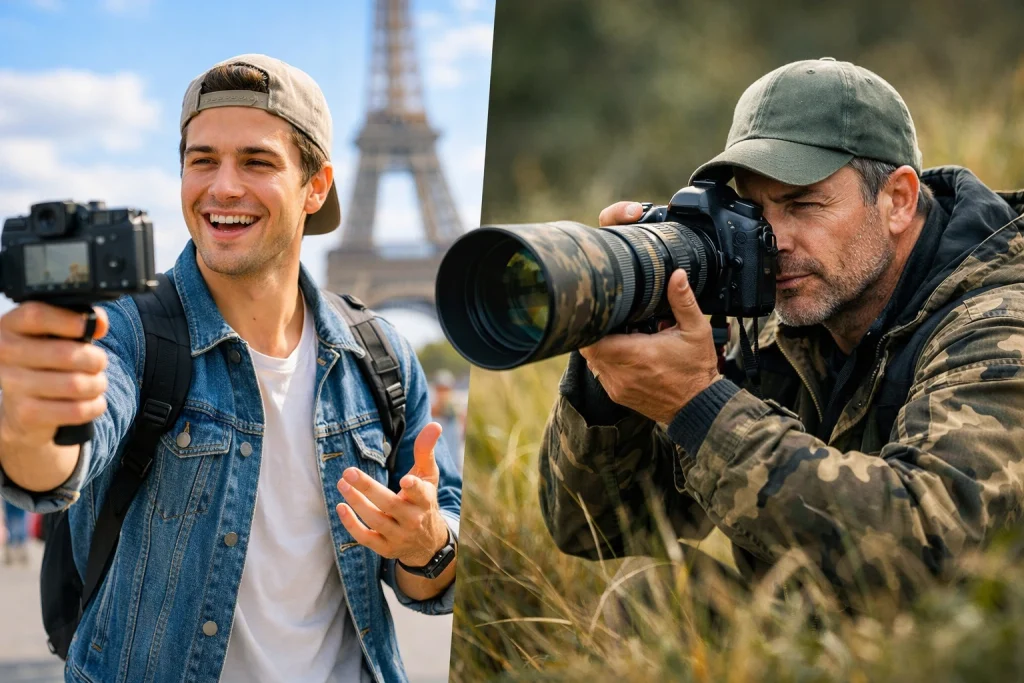
2. Autofocus Performance
ILC Cameras:
- Faster Autofocus: One of the most significant advantages of mirrorless cameras is their superior autofocus performance. On-sensor phase detection allows for faster and more accurate focusing. Newer ILC systems also feature eye-tracking and face detection autofocus, which is highly beneficial for portrait photography and fast-moving subjects.
- Hybrid Autofocus: Many newer mirrorless cameras combine phase-detection autofocus with contrast-detection, further improving performance in low-light conditions.
DSLR Cameras:
- Traditional Phase Detection: DSLRs are known for their fast and reliable phase-detection autofocus when using the optical viewfinder. However, when shooting through the live view or in video mode, DSLRs tend to rely on contrast-detection autofocus, which is slower and less precise compared to mirrorless systems.
- Ideal for Stationary Subjects: If you’re primarily shooting static subjects, DSLR autofocus will still provide great results, though it may not be as fast as a mirrorless camera for moving subjects.
Verdict: ILC cameras are superior in autofocus for dynamic and fast-moving subjects, while DSLRs are great for traditional photography where fast autofocus is less critical.
3. Image Quality
ILC Cameras:
- Similar Sensor Sizes: ILC cameras come with a range of sensor sizes similar to DSLRs, including full-frame, APS-C, and Micro Four Thirds. The sensor size plays a significant role in the overall image quality, and newer mirrorless cameras often offer comparable or even superior image quality to DSLRs.
- Better Low-Light Performance: Due to the improved sensor technology and advanced autofocus systems, modern ILC cameras often excel in low-light performance.
DSLR Cameras:
- Proven Image Quality: DSLRs have consistently delivered excellent image quality over the years. Both Canon and Nikon offer full-frame and APS-C sensor options, and these systems are well-established in professional photography, providing exceptional detail and dynamic range.
- Color Accuracy: DSLRs are still known for their natural color reproduction and sharpness.
Verdict: Both camera types deliver exceptional image quality. If sensor size and low-light performance are essential to you, ILC cameras offer slight advantages. However, DSLRs remain a reliable choice for photographers seeking excellent image quality.
4. Video Capabilities
ILC Cameras:
- Superior Video Performance: Mirrorless cameras are designed with modern video performance in mind. Many ILC cameras offer 4K and even 6K video recording, along with advanced video features such as 10-bit color, Log profiles, and slow-motion video.
- Real-Time Exposure and Focus: The electronic viewfinder allows mirrorless cameras to provide real-time exposure previews, helping videographers make precise adjustments while recording.
DSLR Cameras:
- Limited Video Features: While DSLRs provide decent video quality, they generally lag behind mirrorless systems in terms of features. Most DSLRs are limited to 1080p video, and autofocus during video recording is often slower compared to ILC cameras.
- Great for Casual Video Recording: If you’re using your camera for casual video recording or interviews, a DSLR will still offer great quality, though for professional video work, an ILC system might be a better choice.
Verdict: ILC cameras win when it comes to video performance with their superior autofocus, 4K recording, and enhanced video features.
5. Lens Selection and Compatibility
ILC Cameras:
- Limited Lens Selection: While mirrorless cameras have been growing rapidly in popularity, their lens selection is still limited compared to traditional DSLR systems. Many of the top ILC brands (like Sony and Canon) are continually expanding their lens offerings, but there may still be fewer options compared to DSLRs, especially in specialized lenses.
DSLR Cameras:
- Wide Range of Lenses: DSLRs benefit from a broad range of lens options, including legacy lenses that have been available for decades. For instance, Canon EF-mount and Nikon F-mount lenses are available in numerous styles, and older lenses are often available on the second-hand market at affordable prices.
- Adaptability: DSLRs can adapt to older lenses, making them a popular choice for photographers with existing collections of lenses.
Verdict: DSLR cameras offer a broader selection of lenses, especially if you’re purchasing used gear or need specific lenses for certain photography genres.
Final Thoughts: Making Your Decision
Choosing between an ILC and DSLR in 2026 ultimately depends on your specific needs, budget, and the type of photography or videography you engage in. Both camera types have their merits, but mirrorless cameras are gradually becoming the go-to choice for modern photographers, offering faster autofocus, better video performance, and more portability. However, DSLRs still hold their ground with their ergonomic design, wide lens selection, and reliable performance.
If you’re ready to take your photography or videography to the next level, understanding the strengths of each system will guide you toward the right choice. Happy shooting!. Explore the best pet tech gadgets for owners.