Best Tomb Raider Game Ranked: Which One Tops the List?
Which Tomb Raider game is actually the best?
Ask ten fans, and you’ll get ten different answers — and a heated argument that lasts three hours. Classic Tomb Raider loyalists swear by the PS1 originals. Reboot generation players cite the 2013 game as a revelation. Puzzle lovers think Shadow of the Tomb Raider is criminally underrated. And somewhere in the middle, Rise of the Tomb Raider sits quietly, being the most polished entry that not enough people played.
Lara Croft is one of gaming’s most iconic characters — full stop. Since her debut in 1996, she’s starred in over a dozen games, two distinct design eras, three Hollywood films, and a Netflix animated series. The franchise has sold over 100 million copies worldwide, according to Square Enix’s published figures. That’s not a cult classic. That’s a cultural institution.
But with that many games spanning nearly three decades, figuring out where to start — or which one truly deserves the crown — is genuinely difficult.
This guide solves that. Every major Tomb Raider game is broken down, analyzed honestly, and ranked with the kind of depth that goes beyond surface-level opinion. Whether you’re a returning fan deciding what to replay, a newcomer figuring out where to start, or a long-time obsessive ready to debate — this is the ranking you’ve been looking for.
Let’s get into it
A Brief History of Tomb Raider — Two Eras, One Icon
Before ranking anything, it helps to understand the shape of the franchise.
Tomb Raider launched in 1996, developed by Core Design and published by Eidos Interactive. The original game was a genuine shock to the gaming world — a third-person action adventure with a female protagonist, complex level design, atmospheric exploration, and physics-based platforming that felt revolutionary on PS1 and PC hardware.
The franchise ran hot through the late 90s with annual releases — Tomb Raider II, III, The Last Revelation, Chronicles — before core fatigue and declining quality began to show. The Angel of Darkness in 2003 was meant to reinvent the series but landed as one of the most troubled releases in the franchise’s history, effectively ending Core Design’s run on the IP.
Crystal Dynamics stepped in and delivered a soft reboot with Tomb Raider Legend in 2006, followed by Tomb Raider Anniversary (a remake of the original) in 2007 and Underworld in 2008. This trilogy restored confidence in the series without fully reinventing it.
Then in 2013, everything changed.
Crystal Dynamics delivered a full origin reboot — simply titled Tomb Raider — that reimagined Lara Croft as a young, vulnerable survivor in a brutal open-world environment. It borrowed heavily from Naughty Dog’s Uncharted DNA while finding its own voice through exploration and psychological storytelling. Two sequels followed: Rise of the Tomb Raider (2015) and Shadow of the Tomb Raider (2018), developed by Eidos Montreal.
A new era is on the horizon — a new Tomb Raider title is in development at Crystal Dynamics — but for now, here’s how every major entry in the series stacks up.
How We Ranked These Games
This isn’t a purely subjective list, and it’s not a Metacritic recitation either. Rankings here are based on five criteria assessed across each game:
Gameplay and Controls — How does the game actually feel to play? Fluidity, responsiveness, and mechanical depth.
Level and World Design — Are the environments interesting, varied, and rewarding to explore?
Puzzle Quality — Tomb Raider lives and dies by its puzzles. How inventive, fair, and satisfying are they?
Story and Character — How well does the game develop Lara and the world around her?
Legacy and Impact — How significant was this game within the series and to gaming broadly?
If you enjoy exploring iconic game franchises and comparing their best entries, you can also check out our guide to the best GameCube games of all time, where another generation of legendary titles shaped gaming history.
Each era is assessed with appropriate context. Comparing a 1996 PS1 game directly to a 2018 AAA title is meaningless without acknowledging the technological and design standards of each period. The goal is to identify which game was best at what it tried to do — and which one delivers the most complete experience for a player today.
The Classic Era: Ranking the Core Design Tomb Raider Games (1996–2003)
The classic era is where it all began. These games defined what Tomb Raider was — and they’re still beloved by a generation of players who grew up with them.
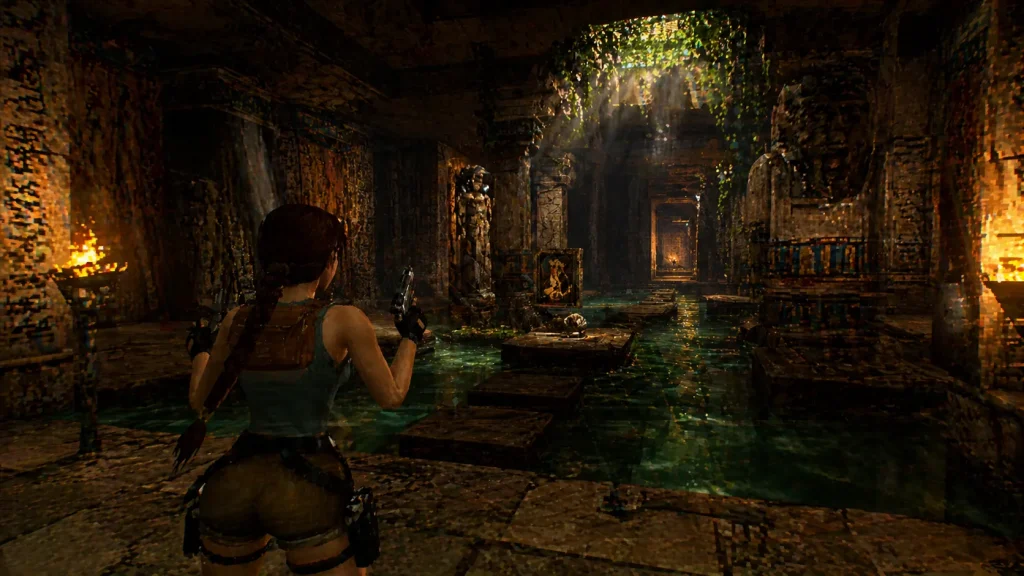
Tomb Raider II (1997) — The Classic Era Peak
If you ask most classic Tomb Raider fans which game in the original era is best, the majority will tell you: Tomb Raider II.
Released just one year after the original, TR2 took everything that worked in the first game and expanded it with more confident level design, greater enemy variety, better pacing, and a Lara who felt more fully realized as a character.
The locations are genuinely iconic. The Great Wall of China. The Maria Doria shipwreck. Tibetan Foothills. Venice. These aren’t just backdrops — they’re environments built around the game’s mechanics in ways that made exploration feel purposeful and rewarding.
The combat stepped up significantly. Dual pistols with infinite ammo remained Lara’s bread and butter, but the addition of a shotgun, harpoon gun, and grenade launcher gave fights more texture. Enemies became more varied — human mercenaries, yetis, sharks, tigers — each requiring different approaches.
TR2 also introduced Lara’s home as a playable tutorial area, which became a series staple. It’s a small thing. But it tells you something about how the developers were thinking about Lara as a character with a world beyond the missions.
If you want to experience classic Tomb Raider at its best, Tomb Raider II is where you start.
Strengths: Incredible level variety, strong pacing, best combat in the classic era, and iconic locations. Weaknesses: Controls haven’t aged gracefully by modern standards, and some late-game sections feel rushed
Tomb Raider (1996) — Where the Legend Began
The original Tomb Raider deserves every piece of reverence it receives — but it also deserves honesty. It is a product of its time in ways that matter.
The 1996 original is atmospheric, intelligent, and architecturally brilliant. The level design — particularly the Egyptian tombs and the Colosseum — is genuinely impressive for hardware of that era. The sense of isolation and exploration it creates is something many modern games fail to replicate.
The T. rex encounter in the Lost Valley remains one of gaming’s most memorable moments. Period.
But the controls are a genuine barrier for new players. The tank controls that felt precise in 1996 feel alien by modern standards. The combat is clunky. The story is minimal. And some of the platforming requires pixel-perfect execution that rewards patience more than skill.
For players who were there at launch, Tomb Raider 1996 is sacred. For new players coming to it today, it’s a historical artifact worth experiencing — but not the entry point.
Strengths: Atmospheric masterpiece, revolutionary level design for its era, iconic moments. Weaknesses: Controls are extremely dated, low narrative depth, unforgiving difficulty curve
Tomb Raider: The Last Revelation (1999)
The Last Revelation is the most ambitious classic Tomb Raider game and the most underappreciated.
Set entirely in Egypt, it doubled down on the archaeological exploration fantasy that the series was always supposed to be about. The interconnected level structure — where areas from earlier in the game reappear later with new pathways unlocked — was genuinely ahead of its time, anticipating the metroidvania design philosophy before it became mainstream gaming vocabulary.
The puzzle design here is the best in the entire classic era. The game expects you to think. Some sequences are genuinely elaborate — combining environmental clues, inventory items, and spatial reasoning in ways that feel earned rather than arbitrary.
It loses points for the abandonment of Lara’s home, the less varied enemy roster, and a combat system that was starting to show its age even in 1999.
But as a pure exploration and puzzle experience, The Last Revelation is the classic era’s most thoughtful entry.
Many of these games helped define modern action-adventure design, blending exploration, puzzles, and combat. If you enjoy multiplayer or shared gaming experiences alongside single-player adventures, take a look at our best co op Switch games 2026 list for something more social.
Strengths: Best puzzle design of the classic era, interconnected level structure, and strongest Egyptian atmosphere.
Weaknesses: Repetitive environments, dated combat, and no location variety
Tomb Raider III (1998) — The Most Ambitious Stumble
Tomb Raider III went wide. Too wide.
In an attempt to top the variety of TR2, Core Design created a game with locations spanning India, Nevada, London, the South Pacific, and Antarctica. The level design ambition is undeniable. But the execution became increasingly uneven as the game progressed, with some sections (the Nevada jail sequence) feeling like padding rather than adventure.
TR3 also introduced the most punishing difficulty in the classic era. Ammo is scarce. Checkpoints are brutal. Some environmental hazards are essentially trial-and-error with no fair warning.
There are brilliant sections here — the London levels, in particular, show Core Design at its creative peak. But TR3 is ultimately a slightly inconsistent game, trying to do more than it should.
Strengths: Incredible location variety, some of the most creative levels in the classic era. Weaknesses: Inconsistent quality, brutal difficulty spikes, worst pacing in the classic series
Tomb Raider: Angel of Darkness (2003) — The Low Point
Angel of Darkness deserves its reputation.
This isn’t enjoyable criticism. There are glimpses of a genuinely interesting game buried inside AoD — a darker, more mature Tomb Raider story, a Paris setting dripping with atmosphere, an intriguing supporting cast. But the execution is catastrophic.
The controls are broken in ways that actively work against basic gameplay. The stealth mechanics don’t function properly. The companion character Kurtis Trent is introduced as a co-protagonist, but goes nowhere. The game shipped incomplete — multiple planned levels were cut, leaving the story unresolved.
Angel of Darkness destroyed Core Design. Eidos pulled the franchise from them after its poor reception. It remains the most vivid example in gaming history of what happens when a development cycle goes wrong.
Historical curiosity: yes. Recommended play: no.
Strengths: Atmospheric Paris setting, interesting story ambitions, darker tone.
Weaknesses: Broken controls, incomplete story, missing content, technical failures throughout
The Transitional Era: Crystal Dynamics’ First Trilogy (2006–2008)
Crystal Dynamics inherited a damaged franchise and delivered three technically competent games that never quite reached the heights the reboot would later achieve.
Tomb Raider: Legend (2006) — The Rescue Operation
Legend did exactly what it needed to do: it saved Tomb Raider.
Crystal Dynamics brought fluid controls, modern third-person camera mechanics, and a genuine character arc for Lara. The game felt good to play in a way the series hadn’t in years. The grappling hook mechanic added a new dimension to traversal. The motorcycle sequences varied the pace effectively.
The story — centered on Lara searching for her missing mother through a reinterpretation of Arthurian legend — was the most emotionally grounded Tomb Raider narrative to that point.
Legend is short. That’s its biggest problem. The game clocks in at 8–10 hours with relatively limited replayability. And some of the levels — particularly the Kazakhstan sections — are more corridor than tomb.
But as a rescue of a struggling franchise, Legend accomplished everything it needed to.
Strengths: Fluid controls, great character work for Lara, genuinely fun combat.
Weaknesses: Short, some generic level design, limited exploration compared to the classic era
Tomb Raider: Underworld (2008) — The Underrated Gem
Underworld doesn’t get enough credit.
It combined the smooth controls of Legend with larger, more complex environments and a genuine return to the exploration-heavy design philosophy of the classic era. The Mediterranean sea floor sequences are genuinely breathtaking — even today. The Norse mythology storyline is the most intellectually ambitious story Crystal Dynamics told in this period.
The movement system received its best refinement yet, with Lara able to grab ledges mid-fall, kick walls, and chain movement in satisfying ways. The environments had real verticality and multiple paths through each area.
Where Underworld falls short is consistency. Some sections feel underdeveloped. The dual weapon system was underutilized. And the ending — rushed due to development time constraints — doesn’t pay off the story properly.
But for fans of exploration and atmosphere, Underworld is one of the most rewarding games in the entire franchise.
Strengths: Best exploration of the transitional era, stunning environments, strong story ambition. Weaknesses: Inconsistent level quality, rushed ending, some technical issues at launch
Tomb Raider Anniversary (2007) — A Respectful Remake
Anniversary is a fascinating case study in how to remake a classic game.
Crystal Dynamics took the 1996 original, rebuilt it in Legend’s engine, refined the level design, added the grappling hook mechanic, and delivered a version of the original game that’s both faithful and genuinely modernized.
The result is one of the most playable versions of the Tomb Raider origin story available. The T. rex is still terrifying. The Egyptian tomb atmosphere is intact. But now the controls work, the camera doesn’t fight you, and the platforming is satisfying rather than frustrating.
An anniversary isn’t original — by definition, it can’t be. But as a remake, it’s nearly perfect, and it introduced an entire generation of Crystal Dynamics-era players to the roots of the franchise.
Strengths: Best way to experience the original Tomb Raider today, excellent modernization of level design. Weaknesses: Not original, story depth still limited, shorter than the best entries
The Reboot Trilogy: Crystal Dynamics and Eidos Montreal’s Modern Era (2013–2018)
This is where the franchise reached its commercial and — for many fans — artistic peak. Three games, three different directorial visions, and a Lara Croft arc that takes her from terrified survivor to apex predator to something more nuanced and self-aware.
The evolution of Tomb Raider reflects how gaming has changed across generations — from classic puzzle-heavy gameplay to cinematic storytelling. You can see a similar evolution in our best Sega Genesis games list of all time, where early titles laid the foundation for modern game design.
Tomb Raider (2013) — The Game That Changed Everything
The 2013 reboot is the best introduction to the Tomb Raider franchise for any new player. Full stop.
Crystal Dynamics reimagined Lara Croft from the ground up — stripping away the invincible action hero of the classic era and replacing her with a 21-year-old archaeology graduate on her first real expedition, stranded on a mysterious island, fighting to survive. The vulnerability was intentional, and it worked brilliantly.
The game’s opening hours are genuinely tense. Lara limps through rain and mud. She cries. She makes mistakes. When she makes her first kill — a traumatic bow-hunting sequence that the game gives full emotional weight — you feel it.
The island of Yamatai is one of the best open-world environments in recent gaming history — not for its size, but for its density and atmosphere. Every area tells a story. Every location has a visual history. The combination of crashed ships, Japanese bunkers, Soviet installations, and ancient shrines creates a world that feels authentically layered.
The traversal system is fluid and intuitive. The bow is one of the best-designed weapons in any action-adventure game of the decade. The challenge tombs — optional areas that function as pure puzzle spaces — scratch the classic Tomb Raider itch perfectly.
Where the 2013 game stumbles is in its combat. The Uncharted influence is obvious, and there are sections where the game turns into a wave-based shooting gallery that feels at odds with the survival narrative. Lara goes from traumatized first kill to comfortable mass murderer within a few story beats — the infamous “ludonarrative dissonance” criticism that plagued the game’s reputation.
But those criticisms exist because the rest of the game is so good. The 2013 Tomb Raider is a 9/10 game with some design tensions that prevent it from being perfect.
Strengths: Best origin story in the franchise, incredible atmosphere, top-tier traversal, compelling Lara characterization. Weaknesses: Tone inconsistency between narrative vulnerability and combat volume, too much shooting
Rise of the Tomb Raider (2015) — The Series at Its Most Polished
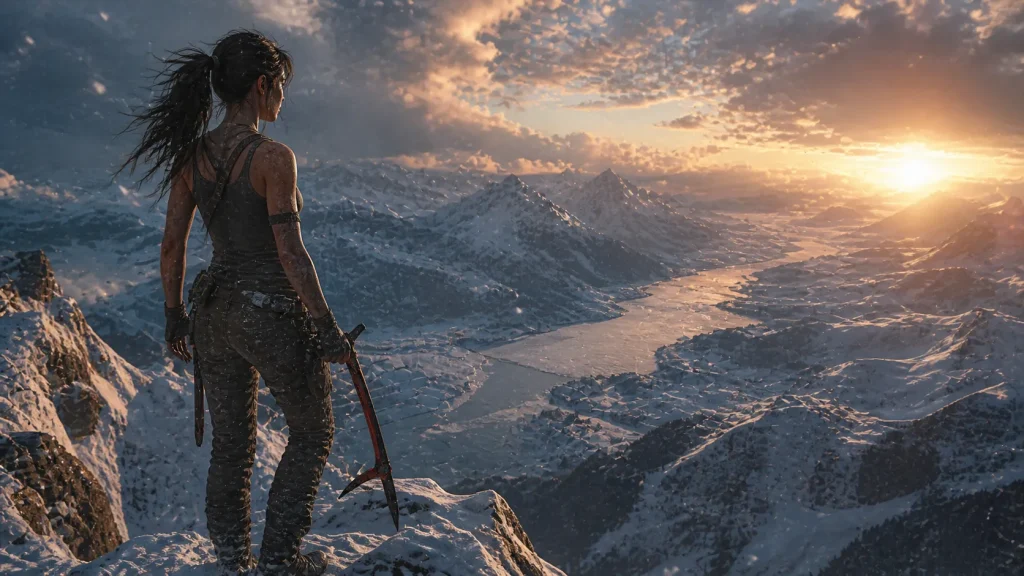
Rise of the Tomb Raider is the best-designed game in the reboot trilogy. It might be the best Tomb Raider game ever made.
The argument goes like this: Rise took every lesson from the 2013 reboot and refined it without losing what made the original compelling. The tombs are better. The environments are bigger and more varied. The crafting system adds genuine strategy to resource management. The story — exploring the myth of a divine source of immortality through the lens of Lara’s conflict with the paramilitary organization Trinity — is more confident and less reliant on shock value.
The Siberian wilderness setting gives the game a scope and beauty that the island of Yamatai couldn’t match. Mountain peaks give way to underground Soviet facilities, ancient Byzantine cities buried beneath the earth, and dense Siberian forests that feel genuinely alive. It’s one of the most visually stunning open-world environments of its console generation.
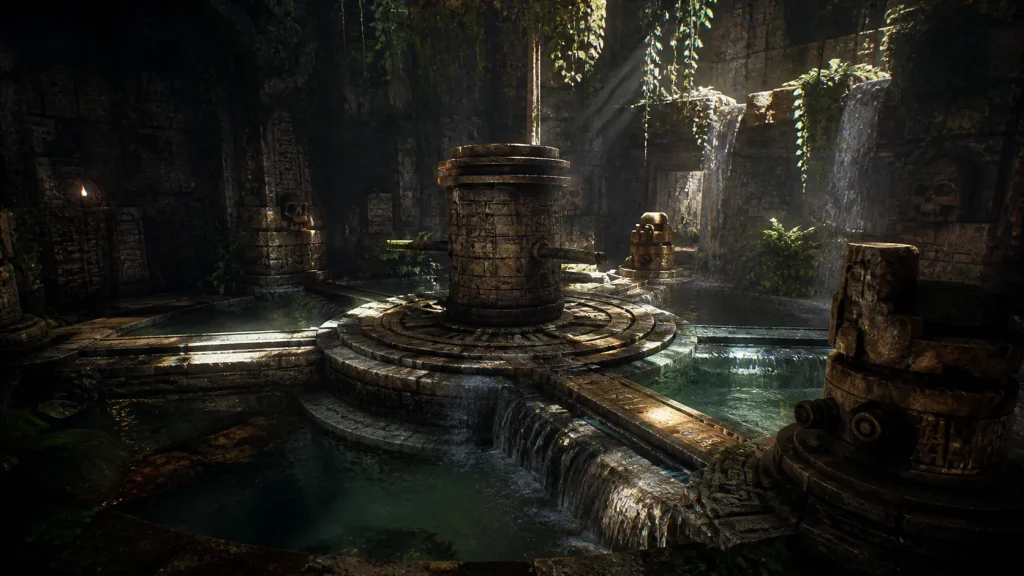
The optional challenge tombs are the best in the trilogy — larger, more complex, and more rewarding than either the 2013 game or Shadow. One particular tomb — involving a flooded underground chamber with dynamic water physics — is as good as any single puzzle in the entire franchise history.
Combat is more varied this time. Crafting bomb arrows, poison arrows, and incendiary arrows mid-fight adds strategic depth. Stealth is better implemented. The enemy AI pushes harder. The game feels like an action-adventure that respects player intelligence.
The one genuine criticism: Rise was a Microsoft exclusive at launch (later arriving on PS4 and PC). That commercial decision significantly reduced its audience and unfairly limited its reputation relative to its quality.
Strengths: Best tombs in the reboot trilogy, stunning environments, polished mechanics, strong story, excellent challenge tomb design. Weaknesses: Launched as a timed exclusive, limiting its cultural impact, Trinity, as a villain, is underwritten
Shadow of the Tomb Raider (2018) — The Dark Conclusion
Shadow of the Tomb Raider is the most divisive game in the reboot trilogy, and it deserves better analysis than it typically receives.
Developed by Eidos Montreal rather than Crystal Dynamics, Shadow made a deliberate choice to prioritize stealth, exploration, and puzzle depth over action. The result is a game that feels genuinely different from its predecessors — and whether you love it or are frustrated by it depends largely on what you came for.
The Peruvian jungle and ancient Mayan/Incan city environments are the most visually spectacular of the trilogy. Paititi — a hidden city that serves as the game’s central hub — is a genuinely remarkable achievement in world-building. The culture, architecture, and NPC life make it feel like a place rather than a level.
The puzzle design is the deepest in the reboot trilogy. Some of the challenge tombs border on proper puzzle game territory — long, multi-stage environmental challenges that reward observation and lateral thinking. For fans who felt the 2013 reboot and Rise leaned too hard on combat, Shadow feels like a correction.
Where Shadow loses ground is in Lara’s arc. The character development that was so compelling in 2013 feels muddled here. Lara causes a catastrophic series of events through impulsive decisions and then spends most of the game dealing with the consequences, which is interesting in theory but executed in ways that make her feel reactive rather than driven. The emotional beats that land in the other two games are less consistent here.
The combat — when it does appear — is the weakest of the trilogy. Enemy AI has clear problems, and combat encounters rarely feel tense.
Shadow is a great puzzle and exploration game in a series that needed more of both. It’s a flawed finale for a Lara Croft who deserved a stronger send-off.
Strengths: Best puzzle design in the trilogy, stunning environments, Paititi is a world-building masterpiece. Weaknesses: Weakest combat, inconsistent character writing, uneven pacing
The Best Tomb Raider Game Overall — The Definitive Answer
After analyzing every entry across both eras, the definitive answer is:
Rise of the Tomb Raider is the best Tomb Raider game ever made.
It is the most complete, most polished, and most mechanically sophisticated entry in the entire franchise. It honors the classic series’ commitment to puzzle-driven exploration while delivering the cinematic production quality and character depth the modern era introduced. The environments are stunning. The tombs are the best in the reboot trilogy. The combat is strategic and varied. The story is confident without being overwrought.
The best Tomb Raider game for the overall series crown: Rise of the Tomb Raider (2015)
But the conversation doesn’t end there. Different entries are better for different things — and the honest answer to “which should I play” depends on what you’re looking for.
Best Tomb Raider Game for Beginners
Start with: Tomb Raider (2013)
The 2013 reboot is purpose-built as an accessible entry point. The mechanics are intuitive. The onboarding is gradual. The story gives you an emotional reason to care from the very first scene. And it’s the beginning of the current canon, so you’ll be set up perfectly for Rise and Shadow afterward.
If you want to experience the classic era after the reboot trilogy, start with Tomb Raider Anniversary — it gives you the original story in a playable modern format.
Best Tomb Raider Game for Puzzle Lovers
Best choice: Shadow of the Tomb Raider
If puzzles are what you live for in adventure games, Shadow delivers the deepest puzzle design in the modern era. The challenge tombs in particular reach genuine puzzle game depth.
Classic era choice: Tomb Raider: The Last Revelation
For the classic era, The Last Revelation has the most elaborate and intellectually demanding puzzles of any Core Design game.
Best Tomb Raider Game for Story
Best choice: Tomb Raider (2013)
The 2013 reboot has the strongest narrative foundation — a character study wrapped in a survival thriller that gives Lara genuine emotional depth for the first time in the franchise.
Runner-up: Rise of the Tomb Raider
Rise tells a more ambitious story, and its themes of faith, immortality, and obsession are handled with more sophistication than the action-thriller beats of the 2013 game. It’s the better story — but the 2013 game’s character work is more emotionally raw and memorable.
Best Tomb Raider Game for Combat
Best choice: Rise of the Tomb Raider
The crafting system, stealth mechanics, and enemy variety make Rise’s combat the most strategic and satisfying in the franchise. The ability to craft poison arrows, fire arrows, and explosive arrows in the field — combined with environmental traps and stealth kills — creates a combat system with genuine depth.
Classic era choice: Tomb Raider II
TR2 has the most varied and satisfying combat in the Core Design era, with the best enemy variety and most satisfying weapon selection.
The Tomb Raider Series: How Lara Croft Evolved Over 29 Years
The transformation of Lara Croft as a character across the series is one of gaming’s most interesting character evolution stories.
1996–2003 — The Icon Original Lara was a power fantasy. Dual pistols. Short shorts. Sarcastic quips. She was designed to be aspirational and slightly transgressive — a female Indiana Jones who was cooler and more capable than any male counterpart the genre offered. She wasn’t deeply written, but she didn’t need to be. She was a presence.
2006–2008 — The Archaeologist Crystal Dynamics’ first run gave Lara emotional history — a missing mother, a complicated relationship with her father’s legacy, and friendships that mattered to her. Legend’s Lara was warmer, more human, and more relatable than her classic counterpart.
2013–2018 — The Survivor: The reboot trilogy deconstructed Lara entirely. She started as a vulnerable young woman forced into survival situations she wasn’t prepared for, and the three games traced her psychological transformation into the legendary Tomb Raider. It was a bold, sometimes divisive choice that paid off in terms of character depth even when it created tonal inconsistencies.
2024 and beyond — The New Chapter. The upcoming new Tomb Raider title from Crystal Dynamics is positioned to take a new direction, though details remain limited. The Amazon Prime animated series has given the franchise additional narrative territory to work with, and the character has a cultural foundation that few gaming IPs can match.
What’s Next for Tomb Raider in 2025 and Beyond
As of 2025, Crystal Dynamics is actively developing a new Tomb Raider title. The game is being developed on Unreal Engine 5, which signals a significant visual and technical leap from the reboot trilogy.
Amazon Games acquired the publishing rights to the franchise in 2022, partnering with Crystal Dynamics following the fallout from the Square Enix acquisition period. The Amazon Prime animated series — set in a world that combines both classic and reboot continuities — has expanded the franchise’s reach to new audiences.
The direction of the new game remains under wraps, but the franchise has the foundation, the character, and the creative momentum to deliver something genuinely special. Lara Croft has survived nearly three decades in gaming by adapting. There’s no reason to think she’s done yet.
Full Series Ranking Summary
For quick reference, here’s the definitive, complete ranking:
Reboot Trilogy:
- Rise of the Tomb Raider — Best overall game in the franchise
- Tomb Raider (2013) — Best entry point, strongest emotional storytelling
- Shadow of the Tomb Raider — Best puzzles, weakest finale
Classic Era: 4. Tomb Raider II — Best of the Core Design era 5. Tomb Raider: The Last Revelation — Most ambitious classic game 6. Tomb Raider (1996) — Revolutionary but dated 7. Tomb Raider III — Most ambitious stumble
Transitional Era: 8. Tomb Raider: Underworld — Most underrated game in the franchise 9. Tomb Raider: Legend — Best rescue of a struggling series 10. Tomb Raider: Anniversary — Best remake in the series
The One to Avoid: 11. Tomb Raider: Angel of Darkness — Historical curiosity only
Final Word
Tomb Raider is one of the most important franchises in gaming history — and it’s earned that status by consistently reinventing itself without losing the core of what makes it special: a brilliant, driven woman exploring dangerous places that most people aren’t brave enough to enter.
Rise of the Tomb Raider is the best the series has ever been. But the 2013 reboot is the most impactful. Tomb Raider II is the best classic game. And The Last Revelation is the most underappreciated puzzle experience in the franchise.
The right answer to “which is the best Tomb Raider game” depends on what kind of player you are — and this guide has given you every piece of information you need to find your answer.
Now go raid some tombs.