
Error Code 233 001? Fix Video Playback Timeouts Now
You’re settled in. Stream is live. You hit play.
And then error code 233 001 kills everything.
No video. No audio. Just a cold error string sitting in the middle of your screen, offering zero explanation and zero sympathy.
If you’ve landed on this page, you already know the frustration. Error code 233 001 — also commonly searched as error code 23301 — is one of those streaming and video playback errors that appear without warning and refuse to explain itself. It shows up on Twitch, on embedded video players, on browser-based streaming platforms, and occasionally on dedicated media applications.
The good news — and there genuinely is good news here — is that error 233 001 is almost always fixable. It has a defined set of causes and a clear set of solutions that work. You don’t need to be a tech wizard. You just need the right information in the right order.
This guide gives you everything. What error code 233 001 actually means, every known cause behind it, and a full ranked list of fixes that work in 2026 — whether you’re hitting this error on Twitch, a browser-based video player, a gaming platform, or a standalone streaming application.
Let’s end this error.
What Is Error Code 233 001?
Error code 233 001 — sometimes written as 23301 or 233001 — is a video playback failure error that occurs within browser-based or application-based streaming environments.
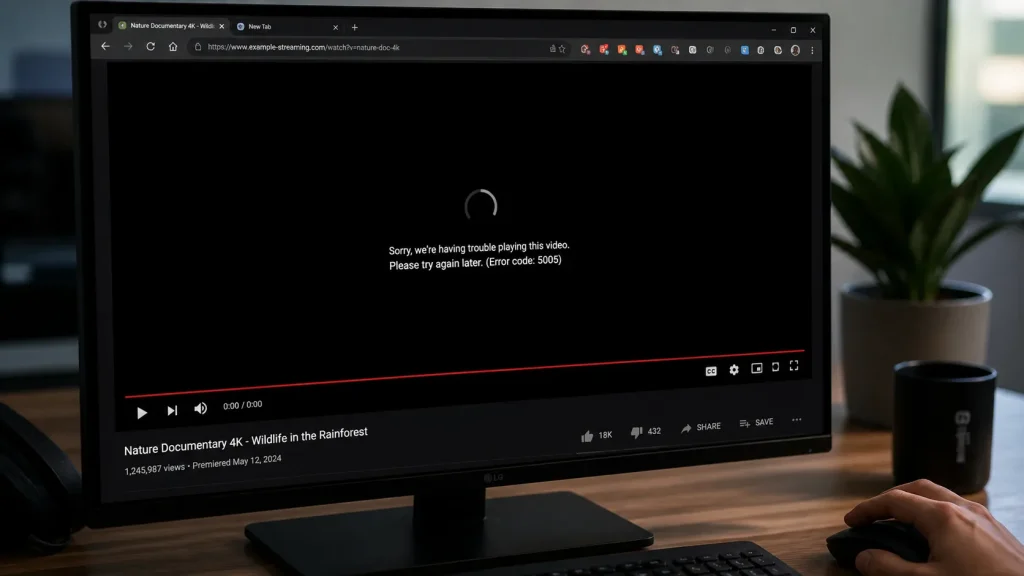
At its core, the error means one simple thing: the video player failed to initialize, load, or maintain the media stream it was attempting to play.
The specific failure can happen at several different points in the streaming pipeline:
- The media player failed to receive the stream data from the content delivery network (CDN)
- The browser’s media engine failed to decode the incoming video format
- A plugin, extension, or security tool interrupted the player’s connection
- The player’s session data became corrupted or expired
- The streaming platform’s servers failed to respond within the expected time window
What makes error 233 001 particularly frustrating is its ambiguity. Unlike more specific error codes that tell you exactly where the problem lives, 233 001 can originate from any point in the chain between the streaming server and your screen.
But that ambiguity also means the fix list is finite and systematic. Work through the causes in the right order, and you’ll find it.

Where Does Error Code 233 001 Appear?
Understanding where this error shows up helps you apply the right platform-specific fixes.
Twitch Error code 233 001 is most commonly reported on Twitch — both on live streams and on VOD (Video on Demand) replays. It typically appears as a black screen with the error code displayed in the player area. Twitch’s HTML5 player is particularly sensitive to browser configuration issues, extension conflicts, and network interruptions.
Browser-Based Video Players. Any website using an HTML5 video player, JW Player, Video.js, or similar embedded streaming technology can produce error 233 001. This includes streaming platforms, news sites with video content, educational platforms, and sports streaming services.
Gaming Platforms: Some gaming platforms with integrated streaming or video content features can produce this error code when their embedded media players encounter playback failures.
Live Streaming Services Services like YouTube Live, Facebook Gaming, and other live streaming platforms occasionally produce this error — though it’s most frequently associated with Twitch specifically.
Legacy Flash-Based Players Although Flash Player reached end-of-life in December 2020, some legacy platforms still attempt to use Flash-based fallback players. These will almost always produce error 233 001 or similar codes on modern browsers since Flash is no longer supported.
Even though Flash-based errors are mostly legacy today, similar “connection failed” issues still appear in modern platforms when session or network communication breaks unexpectedly.
If you’ve ever seen similar instability while trying to launch games or online services, this breakdown is closely related:
Failed to Connect to Steam Error Code 211 — Complete Fix Guide explains how modern streaming-style connection failures happen in gaming clients, too.
What Causes Error Code 233 001?
Let’s map out every known cause before diving into fixes. Understanding the cause points you directly to the right solution.
Corrupt Browser Cache is the most common cause. Your browser stores cached data from previously visited websites to speed up loading times. When that cache becomes corrupted or holds outdated data from a previous streaming session, the video player may fail to initialize correctly — producing error 233 001.
Conflicting Browser Extensions Ad blockers, privacy extensions, script blockers, VPN extensions, and other browser add-ons can interfere with the JavaScript and media APIs that streaming players rely on. Even extensions that have worked fine for months can start causing conflicts after a browser or extension update.
Disable JavaScript or Cookies. Streaming players are entirely dependent on JavaScript to function. If JavaScript is disabled or partially blocked in your browser settings, the player will fail. Similarly, some streaming platforms require session cookies to authenticate your stream access.
Browser Hardware Acceleration Hardware acceleration uses your GPU to process graphics and video rendering. In some configurations — particularly with certain GPU drivers — hardware acceleration causes video decoding failures that produce playback errors, including 233 001.
VPN or Proxy Interference: VPNs and proxy servers reroute your network traffic, which can cause CDN routing problems. Streaming platforms serve content through geographically distributed CDN nodes — your VPN may be routing you to a server that’s incompatible with the content you’re trying to access.
DNS Resolution Issues: Slow or corrupted DNS records can prevent your browser from resolving the CDN addresses that deliver streaming content. The video player attempts to connect, fails, and throws error 233 001. DNS-related failures are not unique to video streaming — they also affect gaming clients and download platforms that rely on the same CDN-style infrastructure.
A similar real-world example is covered in:
“Steam Error Code 53 Fixes — Network & Connection Problem Solutions” breaks down how DNS, firewall, and routing issues disrupt service connectivity in gaming environments.
Platform Server Issues Sometimes the error originates entirely on the platform’s end. Server outages, CDN failures, and maintenance windows can all produce error 233 001 for large numbers of users simultaneously.
Ad Blocker Conflicts Ad blockers specifically targeting streaming platforms can accidentally block legitimate streaming API calls alongside the ad calls. This is different from a general extension conflict — it’s an ad blocker that’s too aggressive in what it filters.
Outdated Browser Version: Modern streaming platforms use current web standards. Outdated browser versions may lack support for specific video codecs, media APIs, or security protocols that the streaming player requires.
Firewall or Antivirus Blocking Security software can block the specific ports or domains that streaming CDNs use to deliver content. The video player attempts to pull data from a CDN endpoint, the security software intercepts the request, and the player fails with error 233 001.
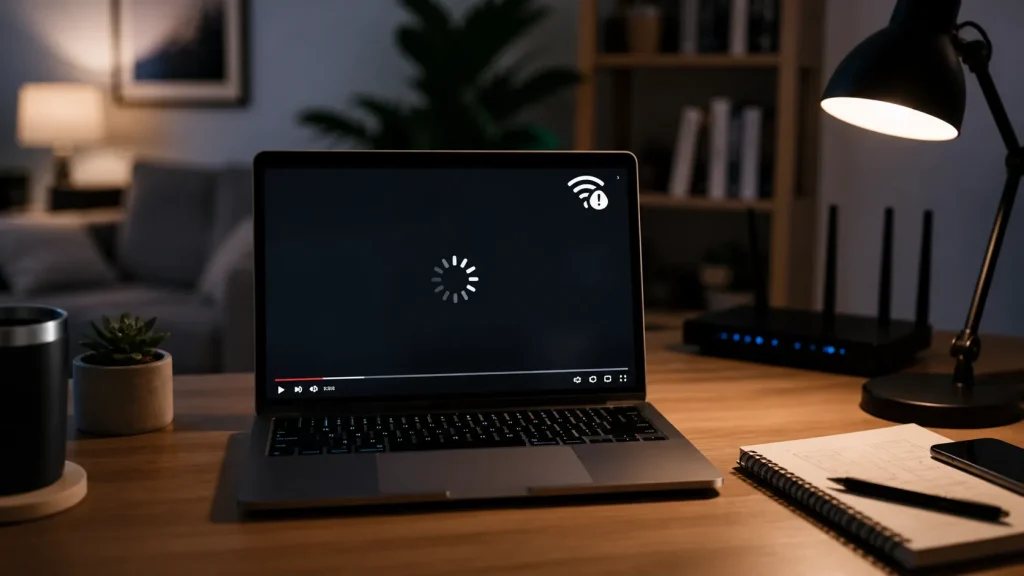
Low or Unstable Network Connection Streaming requires a consistent minimum bandwidth. If your connection drops below that threshold — even briefly — the player may fail to maintain its buffer and throw an error code.
Corrupted Browser Profile. In rare cases, the browser user profile itself becomes corrupted in ways that affect media playback specifically. This requires a browser reinstall or new profile creation to resolve.
Quick Diagnostic Checklist
Before working through the full fix list, run this quick checklist. Your answer might be right here:
- Is your internet connection working? Test it on another tab or device
- Is the streaming platform itself down? Check its status page
- Are you running a VPN? Disable it and test
- Have you tried refreshing the page? (Not just clicking the video again — full page refresh with Ctrl + F5)
- Are you running any ad blockers or script blockers? Temporarily disable them
- Are you on an outdated browser version? Check for updates
- Is this happening on all streams or just one specific stream?
- Does the error appear in incognito/private mode?
That last question — incognito mode — is one of the fastest diagnostic tools available. Incognito mode disables extensions by default and uses a clean session cache. If error 233 001 disappears in incognito mode, the problem is either your extensions or your cache. That narrows the fix list significantly.
Fix 1: Refresh the Page Properly — Not Just the Video
The first fix isn’t just clicking play again or hitting the browser’s refresh button. It’s doing a full hard refresh that bypasses cached data.
Hard refresh keyboard shortcuts:
- Windows/Linux: Ctrl + F5 or Ctrl + Shift + R
- Mac: Cmd + Shift + R
A hard refresh forces your browser to reload every element of the page from the server — bypassing any cached scripts, player code, or session data that might be causing the video player to fail.
After hard refreshing, wait 15–20 seconds for the player to fully reload before attempting to play again. This resolves a meaningful percentage of temporary error 233 001 appearances caused by session timeouts or minor cache conflicts.
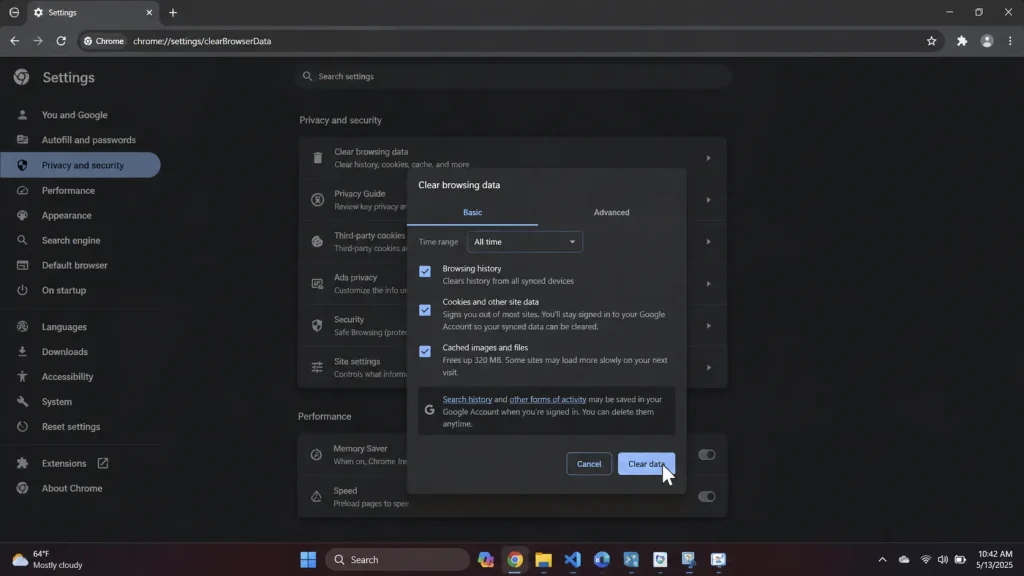
Fix 2: Clear Browser Cache and Cookies
If a hard refresh doesn’t resolve the error, clearing your browser’s full cache and cookie store is the next step — and one of the most effective fixes for error code 233 001.
Chrome:
- Press Ctrl + Shift + Delete (Windows) or Cmd + Shift + Delete (Mac)
- Set time range to “All time.”
- Check: Cached images and files, Cookies, and other site data
- Click “Clear data.”
- Restart Chrome and test
Firefox:
- Press Ctrl + Shift + Delete
- Set time range to “Everything.”
- Check: Cache, Cookies, Active Logins
- Click “Clear Now”
- Restart Firefox and test
Edge:
- Press Ctrl + Shift + Delete
- Set time range to “All time.”
- Check: Cached images and files, Cookies, and other site data
- Click “Clear now.”
- Restart Edge and test
Safari:
- Go to Safari → Preferences → Privacy
- Click “Manage Website Data”
- Click “Remove All”
- Also, go to Develop → Empty Caches (enable Develop menu in Advanced preferences if not visible)
- Restart Safari and test
After clearing cache and cookies, you’ll be logged out of most websites. Log back into your streaming platform and test. This fix resolves the majority of cache-related error 233 001 cases.
Fix 3: Disable Browser Extensions
Browser extensions are one of the primary causes of error code 233 001 — particularly ad blockers, privacy extensions, and VPN extensions that filter or reroute web requests.
The fastest test: Open an incognito window
Incognito mode disables extensions by default in Chrome and most Chromium-based browsers (Edge, Brave, Opera). If error 233 001 disappears in incognito mode, an extension is the cause.
To identify the specific extension:
- Open your browser’s extension manager:
- Chrome: chrome://extensions/
- Firefox: about:addons
- Edge: edge://extensions/
- Disable all extensions at once
- Test the stream — if error 233 001 is gone, an extension was the problem
- Re-enable extensions one by one, testing the stream after each one
- The extension that brings the error back is your culprit
Most common extension culprits:
- uBlock Origin (when set to aggressive filtering mode)
- AdBlock Plus
- Privacy Badger
- Ghostery
- Any VPN extension
- NoScript or ScriptSafe
- Any extension that modifies HTTP headers
Once you identify the problematic extension, either disable it for the streaming platform’s domain specifically or find a less aggressive alternative.
Fix 4: Try a Different Browser
If clearing the cache and disabling extensions don’t fix error 233 001, switch browsers entirely. This tells you immediately whether the problem is browser-specific.
Browser switch test:
- If you use Chrome, try Firefox or Edge
- If you use Firefox, try Chrome or Brave
- If you use Edge, try Chrome or Firefox
If error 233 001 disappears in the alternative browser, the issue is specific to your primary browser’s configuration — profile corruption, a deep cache problem, or a browser-level setting conflict.
In that case, you can either continue using the alternative browser or proceed to the more advanced fixes for your primary browser (resetting settings, reinstalling).
Fix 5: Disable Hardware Acceleration
Hardware acceleration uses your GPU to help render graphics and decode video. In theory, this improves performance. In practice, hardware acceleration combined with certain GPU drivers or display configurations can cause video decoding failures that produce streaming errors, including 233 001.
When hardware acceleration or GPU decoding fails, the issue is often deeper than just browser settings — it can involve how the system handles media rendering pipelines entirely.
A closely related system-level playback issue is explained here:
“How to Fix Audio Renderer Error in Windows 11 — Complete Guide,” which covers failures in Windows media processing engines that can also impact video and streaming playback stability.
Disable in Chrome:
- Go to Settings (three dots menu → Settings)
- Search for “hardware acceleration.”
- Toggle “Use hardware acceleration when available” to OFF
- Click “Relaunch”
- Test the stream
Disable in Firefox:
- Go to Settings → General
- Scroll to “Performance”
- Uncheck “Use recommended performance settings”
- Uncheck “Use hardware acceleration when available.”
- Restart Firefox
- Test the stream
Disable in Edge:
- Go to Settings (three dots → Settings)
- Search for “hardware acceleration.”
- Toggle “Use hardware acceleration when available” to OFF
- Click “Restart”
- Test the stream
This fix is particularly effective for players experiencing error 233 001, specifically during higher quality streams (1080p60, 4K) or after a recent GPU driver update.
Fix 6: Flush DNS Cache and Reset Network Connection
Outdated or corrupted DNS records can prevent your browser from properly resolving the CDN addresses that deliver stream data. A DNS flush forces fresh lookups for all addresses — including the streaming platform’s CDN endpoints.
Windows — Open Command Prompt as Administrator:
ipconfig /flushdns
ipconfig /release
ipconfig /renew
netsh winsock reset
Restart your PC after running all four commands.
Mac — Open Terminal:
sudo dscacheutil -flushcache
sudo killall -HUP mDNSResponder
Linux:
sudo systemd-resolve –flush-caches
or depending on your distribution:
sudo service nscd restart
After flushing DNS, restart your browser and test. This fix is particularly effective when error 233 001 appears alongside general browser slowness or when other streaming platforms are also having issues.
Fix 7: Disable VPN and Proxy Services
VPNs are a frequent and underappreciated cause of streaming errors, including 233 001. Streaming platforms serve content through geographically distributed CDN networks. When your VPN routes traffic through a server in a different region, the CDN routing can break — causing the video player to fail when it can’t reach its expected content endpoint.
Complete VPN disable process:
- Disconnect from your VPN
- Close the VPN application entirely
- Check your system tray — confirm no VPN processes are running
- Check Windows proxy settings: Settings → Network & Internet → Proxy — ensure “Use a proxy server” is OFF
- Flush DNS (see Fix 6) to clear any VPN-altered DNS records
- Restart your browser
- Test the stream
If the stream works with your VPN disabled, your VPN was the cause. Solutions:
- Use your VPN’s split tunneling feature to exclude your browser or the streaming platform from the VPN tunnel
- Connect to a VPN server in your own country or region
- Try a different VPN server within your current region
- Contact your VPN provider’s support — some VPNs have specific settings for streaming
Fix 8: Check Platform Server Status
Don’t waste troubleshooting time if the platform itself is down. Error code 233 001 can appear for thousands of users simultaneously when the streaming platform’s servers or CDN infrastructure experience issues.
For Twitch specifically:
- Check twitchstatus.com — real-time Twitch infrastructure status
- Check DownDetector.com — search Twitch for user-reported outage spikes
- Check Twitter/X — search “Twitch down” or “Twitch error 233” for community reports
For other streaming platforms: Most major streaming services maintain official status pages. Search “[platform name] server status” to find the official status page.
If widespread outages are reported, the only fix is to wait. Platform outages typically resolve within 30–120 minutes for non-critical incidents.
If the platform’s servers show all systems operational and other users aren’t reporting the error, the problem is local to your setup. Continue through the fix list.
Fix 9: Update or Reinstall Your Browser
Outdated browsers lack support for current video codecs, media APIs, and security protocols. If your browser hasn’t updated recently, streaming players may fail because they require browser features your version doesn’t support.
Check your browser version:
- Chrome: chrome://settings/help
- Firefox: about:support
- Edge: edge://settings/help
Update to the latest stable version and restart. Most browsers update automatically, but manual checks are worth doing if you’ve had auto-update issues.
If updating doesn’t help — reinstall cleanly:
- Uninstall your browser via Control Panel → Programs → Uninstall a Program
- Delete remaining profile folders:
- Chrome: %LocalAppData%\Google\Chrome
- Firefox: %AppData%\Mozilla\Firefox
- Edge: %LocalAppData%\Microsoft\Edge
- Restart your PC
- Download and install the latest version from the official website
- Test the stream before reinstalling extensions
A clean browser reinstall eliminates profile corruption, misconfigured settings, and extension conflicts simultaneously.
Fix 10: Adjust Stream Quality Settings
Error code 233 001 sometimes appears, specifically at higher quality settings when your connection bandwidth can’t reliably sustain the stream. The player attempts to maintain high-quality playback, fails to buffer fast enough, and throws an error.
On Twitch:
- Click the gear icon in the video player
- Select “Quality”
- Drop from Auto or 1080p60 down to 720p or 480p
- Test whether the error disappears
On other platforms: Look for a quality or resolution selector in the video player controls — usually accessible through a gear or settings icon.
If lowering quality resolves error 233 001, the issue is bandwidth or connection instability, not a browser or platform problem. Run a speed test to check your actual available bandwidth and consider:
- Switching from Wi-Fi to wired Ethernet
- Pausing other bandwidth-intensive applications
- Restarting your router
- Contacting your ISP if speeds are consistently below expected levels
Fix 11: Disable Firewall and Antivirus Temporarily
Firewall and antivirus software can block the specific CDN domains and ports that streaming platforms use to deliver video content. The block is silent — no notification appears, the video player just fails with an error code.
Test by temporarily disabling:
- Temporarily disable Windows Defender Firewall:
- Search “Windows Defender Firewall” → “Turn Windows Defender Firewall on or off”
- Turn off for both Private and Public networks
- Test the stream
- Temporarily disable your third-party antivirus real-time protection
- If the stream works with these disabled, re-enable them and add your streaming platform as an exception
Adding streaming platforms as firewall exceptions:
For Twitch, add these domains to your firewall’s allowlist:
- *.twitch.tv
- *.twitchapps.com
- *.jtvnw.net (Twitch’s CDN domain)
- *.twitchsvc.net
For other platforms, check their official documentation for required domains and ports.
Fix 12: Check for Ad Blocker Conflicts Specifically
Ad blockers deserve their own dedicated fix section because they’re uniquely positioned to cause error 233 001 — specifically on Twitch and similar streaming platforms.
Streaming platforms serve ads through the same delivery infrastructure as their content. Aggressive ad blockers that try to block Twitch’s ad delivery system can accidentally intercept the content delivery calls as well — blocking both the ads and the stream.
Specific ad blocker fixes for Twitch error 233 001:
If using uBlock Origin:
- Click the uBlock Origin icon
- Click the power button to disable it for the current site
- Test the stream
- If that works, go to uBlock’s filter list settings and disable the “Annoyances” lists specifically — these tend to be the most aggressive for streaming platforms
If using AdBlock or AdBlock Plus:
- Click the extension icon
- Select “Don’t run on pages on this site.”
- Test the stream
Alternative approach — use a Twitch-specific ad blocker: Some ad blockers have been specifically designed to handle Twitch’s ad delivery system without breaking the stream. Switching to one of these purpose-built alternatives can resolve the conflict permanently.
Fix 13: Reset Browser Settings to Default
If you’ve worked through every other fix and error code 233 001 persists in your primary browser, resetting browser settings to default eliminates any misconfiguration that might be causing the issue.
Reset Chrome to default:
- Go to chrome://settings/reset
- Click “Restore settings to their original defaults.”
- Confirm — this resets startup pages, new tab page, search engine, and pinned tabs
- It does NOT delete bookmarks, passwords, or history
Reset Firefox to default:
- Click the menu icon → Help → More Troubleshooting Information
- Click “Refresh Firefox”
- Confirm — this resets extensions and themes but preserves bookmarks, passwords, and cookies
Reset Edge to default:
- Go to edge://settings/reset
- Click “Restore settings to their default values.”
- Confirm
After resetting, test the stream before reinstalling any extensions to confirm the reset worked.
Error Code 233 001 on Twitch — Platform-Specific Fixes
Twitch deserves its own section because it’s the most common platform associated with error code 233 001, and it has some specific quirks that require targeted fixes.
Twitch-Specific Fix: Disable Twitch’s Low Latency Mode
Twitch’s Low Latency Mode reduces stream delay but can cause playback instability on some network configurations — resulting in error 233 001.
- While watching a stream, click the gear icon in the player
- Select “Advanced”
- Toggle “Low Latency” to OFF
- Test the stream
Twitch-Specific Fix: Use Twitch’s Popout Player
Twitch’s popout player uses a slightly different implementation than the main page player.
- Click the gear icon in the video player
- Select “Popout Player”
- This opens the stream in a new window with a cleaner player implementation
- Test whether error 233 001 appears in the popout
If the popout works but the main page player doesn’t, the issue is with Twitch’s page layout interfering with the player — likely an extension conflict.
Twitch-Specific Fix: Log Out and Log Back In
Twitch sessions can expire or become corrupted without giving any obvious warning. A forced re-authentication sometimes resolves playback errors.
- Click your profile icon → Log Out
- Clear your Twitch cookies specifically (not all cookies — just Twitch)
- Log back in
- Test the stream
Twitch-Specific Fix: Try the Twitch Desktop App
If error 233 001 persists in every browser, the Twitch desktop application bypasses browser-related causes entirely. The app uses Electron — a desktop browser wrapper — with its own rendering engine independent of your installed browsers.
Download the Twitch desktop app from Twitch’s official website and test whether error 233 001 appears there. If it doesn’t, the problem is browser-specific.
Error Code 233 001 on Mobile — Platform-Specific Fixes
Mobile users encounter error 233 001 too — typically in mobile browsers or within apps. The fixes differ slightly from the desktop.
Mobile browser fixes:
- Clear app cache: Go to Settings → Apps → [Your Browser] → Storage → Clear Cache
- Disable mobile browser extensions: Mobile browsers like Chrome and Firefox support limited extensions — disable them and test
- Switch from mobile browser to app: Use the platform’s native app instead of the mobile browser — apps typically handle media playback more reliably
- Check data connection: Switch between Wi-Fi and mobile data to test whether the error is connection-specific
- Restart the app completely: Force-close the app (don’t just minimize), wait 10 seconds, reopen
- Update the app: Check your App Store or Google Play Store for pending updates to the streaming app
- Reinstall the app: Delete and reinstall the streaming platform’s app to clear any corrupted installation data
How to Prevent Error Code 233 001 From Coming Back
Fix it once and keep it fixed. Here’s how to minimize the chances of error 233 001 returning.
Keep your browser updated. Browser updates add support for new media codecs, API improvements, and security patches that streaming platforms require. Enable automatic updates and don’t ignore update prompts.
Clear cache regularly. Set a reminder to clear your browser cache monthly. Accumulated cached data becomes fragmented and corrupted over time — regular clearing prevents the buildup that leads to streaming errors.
Use purpose-built ad blockers for streaming. Instead of applying general-purpose ad blockers to streaming platforms, use tools specifically designed to handle streaming platform ads without breaking the player. Fewer filter rules means fewer accidental player interference incidents.
Keep extension lists lean. Every extension you add to your browser is another potential conflict source. Periodically review your extensions and remove any you don’t actively use. Fewer extensions equals a more stable streaming environment.
Use a wired connection for streaming, as Wi-Fi signal drops and interference cause the exact kind of network instability that triggers streaming errors. A wired Ethernet connection eliminates this entire category of problem.
Monitor the platform status before troubleshooting. Before assuming any streaming error is your problem, check the platform’s server status. Spending 20 minutes troubleshooting a server outage is 20 minutes wasted. Make status checking a habitual first step.
Error Code 233 001 vs Similar Streaming Error Codes
Understanding how 233 001 compares to related errors helps confirm you’re troubleshooting the right issue.
Error 233 001 — Video player initialization or stream loading failure; usually browser, extension, cache, or network related
Error 2000 — Network error on streaming platforms; typically a connection or firewall issue
Error 4000 — Media resource format not supported; usually a codec or browser compatibility issue
Error 5000 — Server-side error; platform infrastructure problem
Error 6000 — Playback failure; often related to ad blocker conflicts on Twitch specifically
Error 1000 — Account authentication failure; session has expired
Twitch Black Screen — Often caused by the same triggers as error 233 001 — extensions, hardware acceleration, cache
If your error code matches 233 001 exactly, the fixes in this guide are targeted correctly. If you’re seeing a different code alongside 233 001, the additional code may point toward a more specific cause.
Final Word
Error code 233 001 is one of those errors that looks mysterious but isn’t. It has a defined set of causes and a clear set of fixes — and working through them systematically will get you back to your stream.
Start with the basics: hard refresh, incognito test, cache clear. Those three steps alone resolve the error for the majority of players.
If you’re still stuck, the extension isolation test, hardware acceleration toggle, DNS flush, and VPN disable cover the next tier of causes. And for persistent cases, a browser reset or reinstall gives you a completely clean slate.
The error will not defeat you. Work through the list, find your cause, apply the fix, and get back to watching.
Now stop reading and go fix it.


