
Best HR Software for Startups in 2026 – Top Picks & Reviews
Choosing the right HR software for startups can make the difference between streamlined operations and administrative chaos. As your team grows from five to fifty employees, manual HR processes become unsustainable. The right platform automates payroll, simplifies hiring, ensures compliance, and scales with your business.
This comprehensive guide reviews the best HR software for startups, comparing features, pricing, and use cases to help you make an informed decision. Startups can boost efficiency with automation software for developers.
Why Startups Need HR Software
Many founders delay investing in HR tools until problems emerge. Payroll errors accumulate, compliance requirements get missed, and onboarding becomes inconsistent. Modern HR software for startups prevents these issues before they become expensive.
Key Benefits of Early Implementation:
Compliance Protection – Labor laws and tax requirements vary by location. Automated HR systems reduce compliance risks by tracking regulations and ensuring proper documentation.
Faster Hiring – Built-in applicant tracking systems streamline recruitment, from job postings to offer letters, helping startups compete for talent.
Payroll Automation – Automated payroll eliminates manual calculations, reduces errors, and ensures timely processing with proper tax withholdings.
Centralized Data – Employee information, documents, and performance data live in one accessible location instead of scattered spreadsheets.
Scalability – Good HR software grows from 5 to 50+ employees without requiring painful platform migrations.
What Is HR Software for Startups?
HR software for startups refers to cloud-based platforms designed to manage the employee lifecycle for small, fast-growing businesses. These systems prioritize affordability, ease of use, and quick implementation over enterprise complexity.
Core Capabilities Include:
- Employee database management
- Payroll processing and tax filing
- Applicant tracking systems (ATS)
- Onboarding workflows
- Time and attendance tracking
- Performance management
- Benefits administration
- Compliance documentation
Unlike enterprise systems, startup HR software emphasizes simplicity, reasonable pricing, and integration with common startup tools.
Essential Features in HR Software for Startups
Not all platforms offer the same capabilities. Here’s what matters most:
1. Applicant Tracking System (ATS)
Hiring drives startup growth, making recruitment tools essential. Look for resume parsing, interview scheduling, candidate pipeline tracking, and collaboration tools for hiring teams. An integrated ATS eliminates email threads and spreadsheet chaos.
2. Automated Onboarding
Startups move fast, and onboarding should match that pace. Essential features include digital document signing, automated welcome emails, policy acknowledgment tracking, and equipment checklists. Streamlined onboarding improves employee experience from day one.
3. Payroll Management
Payroll is critical and error-prone when done manually. Must-have features include automatic tax calculations, direct deposit, compliance updates, contractor payment support, and multi-state or international capabilities for remote teams.
4. Time & Attendance
Remote and hybrid teams need reliable time tracking. Look for clock-in/out functionality, PTO management, overtime calculations, and leave approval workflows.
5. Performance Management
High-growth startups require performance clarity. Important features include goal tracking (OKRs), feedback systems, performance review cycles, and employee engagement surveys.
6. Benefits Administration
Managing health insurance and other benefits manually becomes complex quickly. Look for benefits enrollment portals, insurance tracking, automated deductions, and benefits reporting.
7. Integration Capabilities
Your HR system should integrate seamlessly with accounting software, communication tools, project management systems, and payroll tax platforms. Integration prevents data silos and reduces manual data entry. You can also integrate a task automation tool.
7 Best HR Software for Startups
Here are the top HR software solutions for startups, each excelling in different areas.
1. Gusto – Best for Payroll & Benefits
Best For: US-based startups prioritizing payroll accuracy
Key Features:
- Automated payroll with tax filing
- Benefits administration and enrollment
- Contractor payments and 1099 generation
- Workers’ compensation insurance
- Time tracking integration
- New hire reporting
Pros:
- Extremely user-friendly interface
- Excellent payroll compliance
- Strong benefits marketplace
- Reliable customer support
- Quick implementation
Cons:
- Primarily US-focused
- Limited international payroll
- Basic performance management
- Analytics could be deeper
Pricing: Gusto Base fee of $40/month plus $6 per employee. A 10-person startup pays approximately $100 monthly.
Best Use Case: US startups under 50 employees needing reliable, straightforward payroll automation with benefits administration.

2. BambooHR – Best All-in-One Platform
Best For: Growing teams planning to scale to 50-100 employees
Key Features:
- Comprehensive employee database
- Performance management and reviews
- Onboarding automation
- Applicant tracking system
- Reporting and analytics
- Employee self-service portal
- Organizational charts
- Mobile app access
Pros:
- Intuitive, clean interface
- Strong employee experience tools
- Robust reporting capabilities
- Scales well with company growth
- Good mobile functionality
Cons:
- Payroll requires partner integration
- Pricing increases significantly at scale
- Some features require higher-tier plans
- International capabilities limited
Pricing: Bamboohr pricing starts at $5-8 per employee monthly for core HR features. With payroll add-ons, expect $15-20 per employee. A 20-person team budgets around $300-400 monthly.
Best Use Case: Startups planning rapid growth who value employee experience, performance management, and a platform they won’t outgrow quickly.

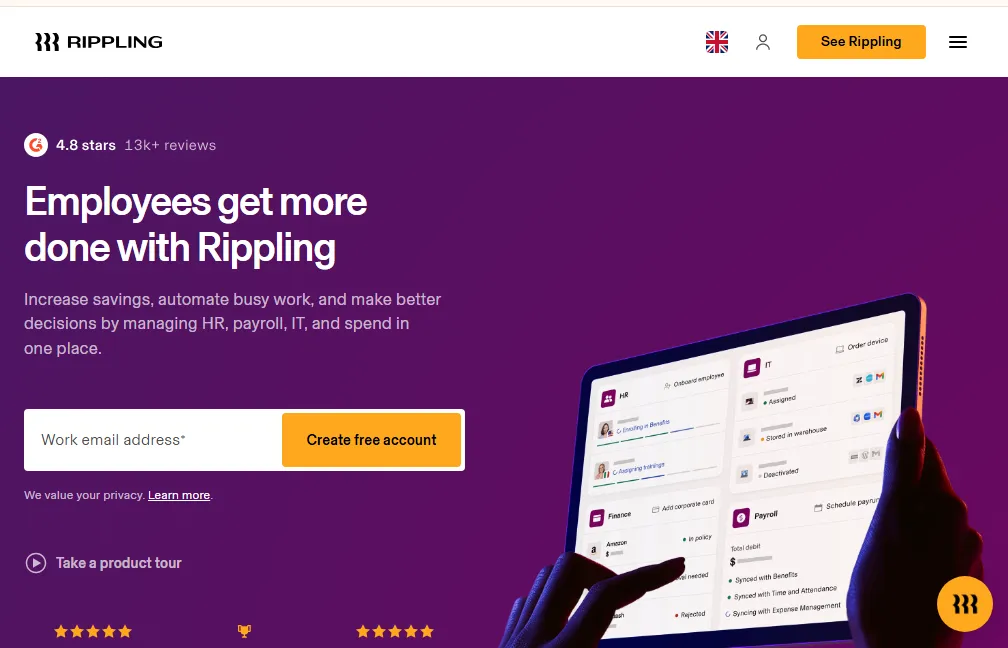
3. Rippling – Best for HR + IT Management
Best For: Tech startups managing remote teams and equipment
Key Features:
- Unified HR and IT management
- Device provisioning and app management
- Global payroll across 150+ countries
- Benefits administration
- Workflow automation
- Spend management
- Security and compliance tools
- Learning management integration
Pros:
- Powerful automation capabilities
- Extensive integration ecosystem
- Strong global payroll support
- Single system for HR and IT
- Highly customizable workflows
Cons:
- Higher pricing than alternatives
- Steeper learning curve
- Complex initial setup
- Can overwhelm small teams
Pricing: Rippling pricing starts around $8 per employee monthly for basic features. Comprehensive functionality costs $15-25 per employee. A 15-person startup with full features budgets $300-375 monthly.
Best Use Case: Tech startups hiring globally who need to manage both HR processes and IT infrastructure, like device provisioning and app access.
4. Zoho People – Budget-Friendly Option
Best For: Cost-conscious early-stage startups
Key Features:
- Employee database management
- Time and attendance tracking
- Leave management
- Performance appraisals
- Employee self-service
- Custom workflows
- Mobile app
- Integration with the Zoho ecosystem
Pros:
- Very affordable pricing
- Customizable to specific needs
- Good for small teams
- Decent mobile functionality
- Part of the broader Zoho suite
Cons:
- Payroll requires a separate product
- Interface less modern
- Compliance features basic
- Customer support slower
- Limited analytics
Pricing: Starts at $1-2 per employee monthly for basic features. Comprehensive setup runs $3-5 per employee. A 10-person startup pays $30-50 monthly.
Best Use Case: Bootstrapped startups with tight budgets who can invest time in setup and configuration in exchange for significant cost savings.

5. Deel – Best for Global Teams
Best For: Remote-first companies hiring internationally
Key Features:
- International payroll in 150+ countries
- Contractor management and payments
- Employer of Record (EOR) services
- Global compliance management
- Localized contracts and benefits
- Immigration support
- Cryptocurrency payment options
- Equipment management for remote workers
Pros:
- Exceptional global compliance
- Simplifies international hiring
- Strong contractor management
- Handles complex multi-country payroll
- EOR services reduce legal complexity
Cons:
- Premium pricing structure
- Limited performance management
- No applicant tracking
- Less relevant for domestic-only teams
- Can be overkill for simple needs
Pricing: Contractor payments start at $49 per contractor monthly. Full EOR services run $599+ per employee monthly. Deel costs scale significantly with international team size.
Best Use Case: Startups hiring employees or contractors across multiple countries who need comprehensive compliance support and international payroll capabilities.

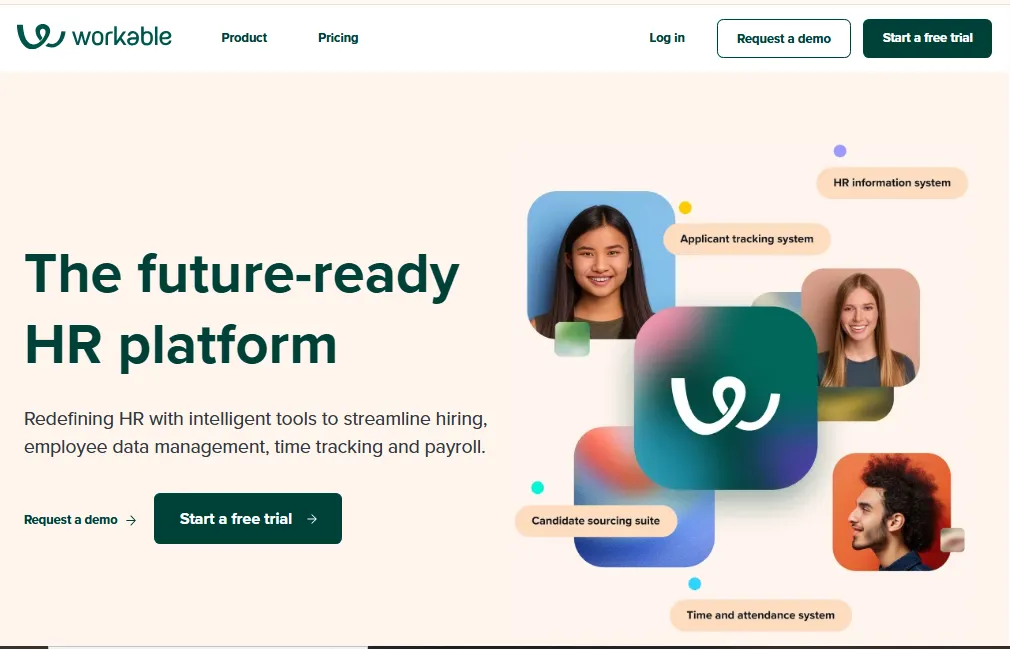
6. Workable – Best Hiring-Focused Software
Best For: High-growth startups with aggressive hiring plans
Key Features:
- Advanced applicant tracking system
- AI-powered candidate sourcing
- Interview scheduling automation
- Collaborative hiring tools
- Job board integrations (200+ boards)
- Recruiting analytics and reporting
- Candidate relationship management
- Mobile recruiting app
Pros:
- Excellent recruiting capabilities
- Strong collaboration features
- AI sourcing finds qualified candidates
- Comprehensive analytics
- Good candidate experience
Cons:
- Limited payroll functionality
- Basic HR management features
- No benefits administration
- Works best paired with other tools
- Higher cost for full features
Pricing: Workable Pricing starts around $149 monthly for basic plans. Advanced features run $300-500 monthly, depending on job postings and user count.
Best Use Case: Startups where hiring velocity is critical, and recruitment is a primary bottleneck. Best paired with dedicated payroll software like Gusto.
7. Freshteam – Affordable ATS + HR
Best For: Small teams under 25 employees
Key Features:
- Applicant tracking system
- Employee onboarding workflows
- Time-off management
- Employee database
- Collaboration tools
- Job board posting
- Interview scheduling
- Basic reporting
Pros:
- Affordable pricing with a free tier
- Decent recruiting tools
- User-friendly interface
- Good for small teams
- Part of the Freshworks ecosystem
Cons:
- Limited scalability beyond small teams
- Payroll requires integration
- Basic performance management
- Analytics capabilities limited
- Won’t support complex workflows
Pricing: Freshteam offers a free version available for up to 50 employees with feature limitations. Paid plans start around $50-100 monthly for small teams with enhanced features.
Best Use Case: Small startups needing basic ATS and HR functionality who want to move beyond spreadsheets without significant investment.
HR Software Pricing Models Explained
Most HR software for startups uses one of these pricing structures:
Per Employee Per Month (PEPM): The most common model charges a monthly fee per employee. Costs typically range from $3-30 per employee, depending on features.
Base Fee Plus PEPM: A flat monthly base fee plus per-employee charges. Example: $40 base + $6 per employee.
Tiered Pricing: Fixed pricing tiers based on employee count ranges (1-10, 11-25, 26-50, etc.).
Feature-Based Pricing: Base HR features at one price, with add-ons for payroll, benefits, performance management, etc.
Budget for total costs, including necessary add-ons, not just advertised base pricing. Implementation fees, support tiers, and integration costs can add significantly to monthly expenses.
How to Choose the Right HR Software
Follow this framework to select the best platform for your startup:
Step 1: Define Your Growth Stage
Pre-seed (1-10 employees): Focus on basic payroll automation and simple onboarding. Tools like Gusto or Zoho People suffice.
Seed stage (10-30 employees): Add applicant tracking and compliance tools. Consider BambooHR or Freshteam.
Series A+ (30-100+ employees): Add performance management, analytics, and scalability. Look at BambooHR or Rippling.
Step 2: Identify Your Team Structure
Consider whether your team is remote, hybrid, or in-office. Determine if you employ contractors, full-time staff, or a mix. Assess if you’re hiring internationally or staying domestic. These factors dramatically affect which features you need.
Step 3: Evaluate Scalability
Choose software that can grow from your current size to 3-5x your employee count without requiring platform migration. Switching systems is expensive and disruptive.
Step 4: Calculate Total Cost
Factor in setup fees, monthly costs for all needed features, payroll processing fees, compliance module costs, and integration requirements. The cheapest base price often isn’t the lowest total cost.
Step 5: Test Integration Requirements
List all systems your HR software must connect with: accounting software, communication tools (Slack, Teams), project management platforms, time tracking apps, and payroll tax systems. Verify integrations work reliably, not just exist on paper.
Common Mistakes Startups Make
Choosing Enterprise Software Too Early: Complex enterprise platforms overwhelm small teams with unnecessary features and steep learning curves.
Ignoring Integration Compatibility: HR software that doesn’t integrate with existing tools creates data silos and manual work.
Underestimating Compliance Requirements: Payroll tax mistakes and compliance violations cost far more than comprehensive HR software.
Not Planning for Growth: Software that works for 5 employees often fails at 30. Plan for where you’ll be in 18-24 months, not just today.
Focusing Only on Price: The cheapest option often lacks critical features like automated compliance, leading to expensive problems later.
Skipping Employee Experience: Poor employee-facing interfaces create frustration and an extra support burden for administrators.
HR Software vs Payroll Software
These terms are often confused but represent different capabilities:
Payroll Software handles salary processing, tax deductions, payment distribution, tax filing, and year-end forms. It’s transactional and focused on compensation.
HR Software handles hiring, onboarding, performance tracking, employee data management, compliance documentation, and benefits administration. It manages the entire employee lifecycle.
Many modern platforms combine both, which is ideal for startups to avoid fragmented workflows and data inconsistencies.
Security and Compliance Considerations
HR software stores sensitive employee data, including social security numbers, bank accounts, salaries, and health information. Security isn’t optional.
Minimum Requirements:
- SOC 2 Type II certification
- GDPR compliance (if hiring in Europe)
- Data encryption (at rest and in transit)
- Two-factor authentication
- Role-based access control
- Regular security audits
- Data backup and disaster recovery
Verify certifications before selecting a platform. Never compromise security for cost savings when dealing with employee data.
Remote and Distributed Startup Considerations
Remote-first startups have unique requirements:
Multi-State Payroll: Employees in different states trigger varying tax obligations. Your software must handle this automatically.
International Payroll: Hiring globally requires understanding local labor laws, tax requirements, and benefits mandates. Platforms like Deel and Rippling specialize here.
Time Zone Management: Scheduling, time tracking, and leave management become complex across time zones.
Contractor Compliance: Misclassifying contractors creates legal risk. Good HR software includes contractor management with proper 1099 handling.
Global Benefits: International employees need localized benefits. Some platforms partner with local providers; others offer global benefits marketplaces.
Free HR Software: Worth Considering?
Several providers offer free tiers or free software options. These work for very small teams (under 10 employees), handling basic employee databases and document storage.
Limitations of Free Tools:
- No payroll automation
- Limited compliance features
- Basic or no reporting
- Minimal support
- Restricted storage
- No integrations
Free software helps startups transition from spreadsheets, but typically requires upgrading within 6-12 months as complexity grows. View free tiers as trial periods, not long-term solutions.
Implementation Timeline
Expect these timeframes for initial setup:
Simple Platforms (Gusto, Freshteam): 1-2 hours for basic configuration. Ready to run payroll within 1-2 days.
Mid-Complexity (BambooHR, Workable): 2-4 hours for setup. Full implementation over 1-2 weeks, including data migration and training.
Complex Platforms (Rippling, Deel): 4-8 hours for configuration. Full implementation 2-4 weeks, including custom workflows and international setup.
Budget additional time for data migration from existing systems, employee training, and parallel processing to verify accuracy before going live.
Key Decision Framework Summary
For US-based startups with under 50 employees prioritizing payroll: Choose Gusto for simplicity, reliability, and strong benefits administration.
For startups planning rapid growth (30-100+ employees): Choose BambooHR for comprehensive HR features that scale, strong employee experience, and robust performance management.
For tech startups with global teams and complex needs: Choose Rippling for powerful automation, unified HR and IT management, and international capabilities.
For bootstrapped startups with minimal budget: Choose Zoho People for affordable basic functionality with customization flexibility.
For startups hiring internationally: Choose Deel for global payroll, compliance, and EOR services across multiple countries.
For startups where hiring is the primary bottleneck: Choose Workable for sophisticated recruiting tools, AI sourcing, and collaborative hiring paired with separate payroll software.
For small teams wanting basic improvement: Choose Freshteam for affordable ATS plus essential HR functions without significant investment.
Final Thoughts on HR Software for Startups
Selecting the right HR software for startups is a strategic decision impacting efficiency, compliance, and team satisfaction. The best platforms streamline hiring, automate payroll, manage benefits, track performance, and ensure legal compliance without overwhelming small teams.
Early-stage startups benefit from lightweight, affordable solutions that prevent spreadsheet chaos. Scaling teams need robust platforms supporting growth without requiring painful migrations. Remote-first companies must prioritize international compliance and global payroll capabilities.
Investing in HR software early saves time, reduces costly errors, and allows founders to focus on growth rather than administrative tasks. The right platform becomes foundational infrastructure for organized, compliant team management, providing competitive advantages in talent acquisition and retention.
The seven platforms reviewed here represent the best HR software for startups in 2026, each serving different needs and growth stages. Evaluate your specific requirements, growth projections, team structure, and budget to make an informed choice that supports your startup’s success.


