
Zapier Alternatives 2026: Best Workflow Automation Tools
Businesses today face mounting pressure to do more with less. Manual workflows drain time and resources. Automation tools solve this by connecting apps and streamlining repetitive tasks. They eliminate human error and free teams to focus on strategic work. Companies using workflow automation report 40-60% time savings on routine processes. This isn’t just convenience, it’s competitive survival. If you’re new, start with beginner’s AI automation.
The Rise of No-Code and Low-Code Integration Platforms
No-code platforms democratized automation. Non-technical users can now build workflows without writing a single line of code. Low-code tools offer flexibility for power users who need custom logic. Both approaches reduce dependency on IT departments. The market has exploded with options. Choosing the right platform means understanding your team’s technical capabilities and growth trajectory.
Where Zapier Fits in the Automation Ecosystem
Zapier pioneered the no-code automation space. It connects 6,000+ apps with simple trigger-action workflows.
The platform excels at straightforward automations. Its beginner-friendly interface made it the default choice for small teams.
But Zapier isn’t perfect for everyone. Pricing concerns, feature limitations, and emerging competitors have users exploring Zapier alternatives.
Why People Are Searching for Zapier Alternatives
Pricing Concerns: Is Zapier Too Expensive for Growing Teams?
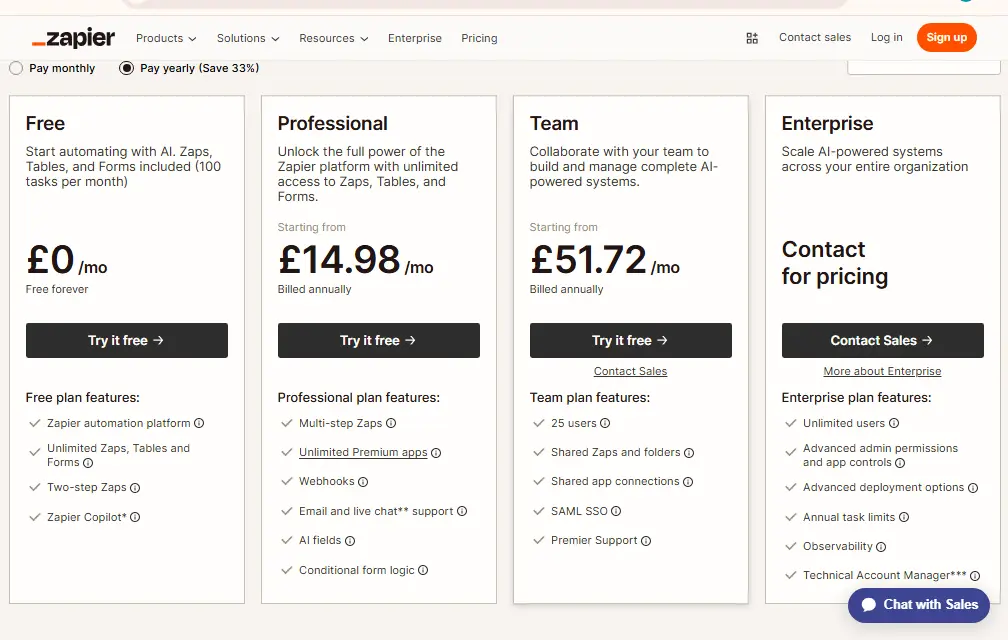
Zapier’s free plan offers just 100 tasks per month. Teams quickly outgrow this limit.
Paid plans start at $29.99/month but scale steeply. Heavy users face bills of $500-1,000 per month.
Cost per task adds up fast. Many businesses find cheaper alternatives to Zapier that deliver identical functionality at half the price.
Task Limits and Hidden Usage Caps
Task counting can be confusing. Multi-step workflows consume tasks quickly, leaving users surprised by overages.
Premium features like webhooks and filters count as additional tasks. This opacity frustrates budget-conscious teams.
Finding a Zapier alternative with transparent usage tracking becomes a priority. Unlimited task plans offer predictable costs.
Advanced Features Locked Behind Premium Plans
Critical features like conditional logic require expensive tiers. Paths, formatters, and error handling aren’t available to free users.
Webhook triggers and custom code steps need premium access. Growing teams hit these walls early.
Zapier alternatives often include advanced features in lower-tier plans. This makes them more accessible to startups and small businesses.
Performance and Reliability Issues
Zapier occasionally experiences delays in task execution. Time-sensitive workflows can fail when triggers lag by minutes or hours.
Downtime, though rare, disrupts critical business processes. Support response times vary by plan level.
Users seeking mission-critical reliability explore alternatives to Zapier with better uptime guarantees and faster execution speeds.
Need for More Customization and Control
Zapier’s interface prioritizes simplicity over flexibility. Power users find its visual builder too restrictive.
Complex workflows with branching logic become unwieldy. Custom API integrations have limitations.
Developers want tools that balance ease of use with deep customization. This gap drives searches for more flexible Zapier alternatives. Developers often rely on developer automation tools.
What to Look for in the Best Zapier Alternative
Transparent Pricing Models
Look for clear pricing tiers without hidden fees. Unlimited task plans provide budget certainty.
Some platforms offer one-time payment options. These eliminate recurring subscription costs.
Compare cost per workflow, not just monthly fees. The best Zapier alternative offers maximum value per dollar spent.
Number of App Integrations Available
Integration count matters, but quality trumps quantity. Ensure your critical apps are supported.
Check for deep integrations beyond basic triggers. Native API support enables custom connections.
Most alternatives to Zapier support 1,000+ apps. Verify your tech stack compatibility before committing.
Multi-Step Workflows and Conditional Logic
Complex automations need branching paths and filters. Look for if/then logic and error handling.
Visual workflow builders should support loops and delays. Test whether conditional logic is included in base plans.
The best Zapier alternatives make advanced features accessible without premium pricing. This levels the playing field for smaller teams.
AI-Powered Automation Capabilities
AI transforms automation from reactive to predictive. Smart triggers analyze patterns and suggest optimizations.
Natural language workflow creation simplifies setup. AI-assisted debugging reduces troubleshooting time.
Forward-thinking Zapier alternatives integrate AI natively. This positions businesses for next-generation automation.
Security, Compliance, and Data Privacy
Enterprise teams need SOC 2 and GDPR compliance. Data residency options matter for regulated industries.
Check encryption standards for data in transit and at rest. Role-based access control prevents unauthorized workflow changes.
Self-hosted alternatives to Zapier give complete data ownership. This satisfies strict security requirements.
Ease of Use vs. Developer Flexibility
No-code tools serve business users. Low-code platforms empower technical teams with custom scripts.
The ideal solution balances both. Beginners get drag-and-drop simplicity while developers access full API control.
Evaluate your team’s technical mix. Choose a zapier alternative that matches your current skills and future growth.
Customer Support and Documentation Quality
Comprehensive documentation accelerates onboarding. Look for video tutorials, templates, and community forums.
Support responsiveness varies dramatically. Premium tiers often include dedicated success managers.
Test support quality during trials. The best alternatives to Zapier invest heavily in customer education and rapid problem resolution.
Types of Alternatives to Zapier
No-Code Automation Tools for Beginners
No-code platforms require zero programming knowledge. Drag-and-drop interfaces make automation accessible to everyone.
Pre-built templates jumpstart common workflows. These tools prioritize user-friendliness over deep customization.
Perfect for small businesses and solopreneurs. Popular no-code Zapier alternatives include IFTTT and Pabbly Connect.
Low-Code Platforms for Power Users
Low-code tools offer visual builders plus custom code blocks. This hybrid approach handles complex scenarios.
Users add JavaScript, Python, or other scripts when needed. Visual elements reduce development time for standard tasks.
Make (formerly Integromat) leads this category. It provides granular control without sacrificing usability.
Open-Source Automation Tools
Open-source solutions offer complete transparency and customization. You can self-host on your own infrastructure.
Free to download and modify. Active communities contribute plugins and integrations.
n8n stands out as the leading open-source alternative to zapier. It combines powerful features with full data ownership.
Enterprise-Grade Workflow Automation Systems
Enterprise platforms handle massive scale and complex governance. They integrate with legacy systems and modern SaaS.
Advanced features include audit logs, SSO, and multi-environment deployments. Pricing reflects enterprise needs.
Workato and Microsoft Power Automate dominate this space. These Zapier alternatives serve Fortune 500 companies. For broader use cases, explore the best task automation software.
Best Zapier Alternatives (Detailed Comparison)
Make (Formerly Integromat)
Visual Workflow Builder
Make features a visual scenario builder that maps data flow between apps. Modules connect with lines showing exactly how information moves.
This approach makes complex workflows easier to understand. Users can see the entire automation at a glance.
Unlike Zapier’s linear format, Make supports parallel processing and advanced routing. This flexibility makes it a powerful Zapier alternative for technical users.

Advanced Routing and Error Handling
Make includes built-in error handlers and retry logic. Workflows can branch based on success or failure conditions.
Fallback paths ensure critical processes never fully break. Detailed execution logs help troubleshoot issues quickly.
These enterprise-grade features come standard, not locked behind premium tiers. Make outperforms Zapier in reliability for mission-critical workflows.
Pricing Breakdown
Make offers of 1,000 operations monthly on its free plan. Paid plans start at $9/month for 10,000 operations.
Operations pricing is more predictable than Zapier’s task counting. Each data transfer counts as one operation.
For high-volume workflows, Make delivers better value. It’s a cost-effective alternative to Zapier for growing teams.
Microsoft Power Automate
Deep Integration with Microsoft Ecosystem
Power Automate connects seamlessly with Office 365, Teams, SharePoint, and Dynamics 365. Microsoft users get native integrations.
Pre-built templates cover common Microsoft workflows. No additional setup needed if you’re already in the ecosystem.
For organizations heavily invested in Microsoft, this Zapier alternative feels like a natural extension of existing tools.
Enterprise-Level Automation
Power Automate handles desktop automation via RPA (Robotic Process Automation). Legacy systems integrate through UI-based bots.
Governance features include DLP policies and centralized admin controls. IT departments maintain oversight of all workflows.
Process mining and analytics provide insights into automation ROI. These capabilities position it as an enterprise alternative to Zapier.
When It’s a Better Alternative to Zapier
Choose Power Automate if you use Microsoft 365 extensively. The bundled licensing makes it essentially free for many organizations.
Large enterprises benefit from Microsoft’s enterprise support and compliance certifications. SMBs may find it overly complex.
For non-Microsoft shops, it’s less attractive. Zapier or other alternatives offer better third-party app support.
n8n
Open-Source Flexibility
n8n provides complete source code access. Developers can fork, modify, and extend the platform freely.
Community contributors build custom nodes for niche services. This ecosystem grows continuously without vendor lock-in.
Being open-source makes n8n the most customizable Zapier alternative available. Technical teams gain unprecedented control.
Self-Hosting Benefits
Deploy n8n on your own servers or cloud infrastructure. All data stays within your network perimeter.
This satisfies strict compliance requirements that cloud-only tools can’t meet. The healthcare and finance industries particularly value this.
Self-hosting eliminates recurring SaaS costs. You only pay for infrastructure, making it a budget-friendly alternative to Zapier long-term.
Ideal Use Cases
Perfect for companies with in-house DevOps teams. Technical expertise required for setup and maintenance.
Regulated industries needing air-gapped environments benefit most. Startups with technical founders also find it appealing.
Non-technical teams should consider n8n’s cloud offering instead. It provides the same features without server management.
Pabbly Connect
One-Time Payment Options
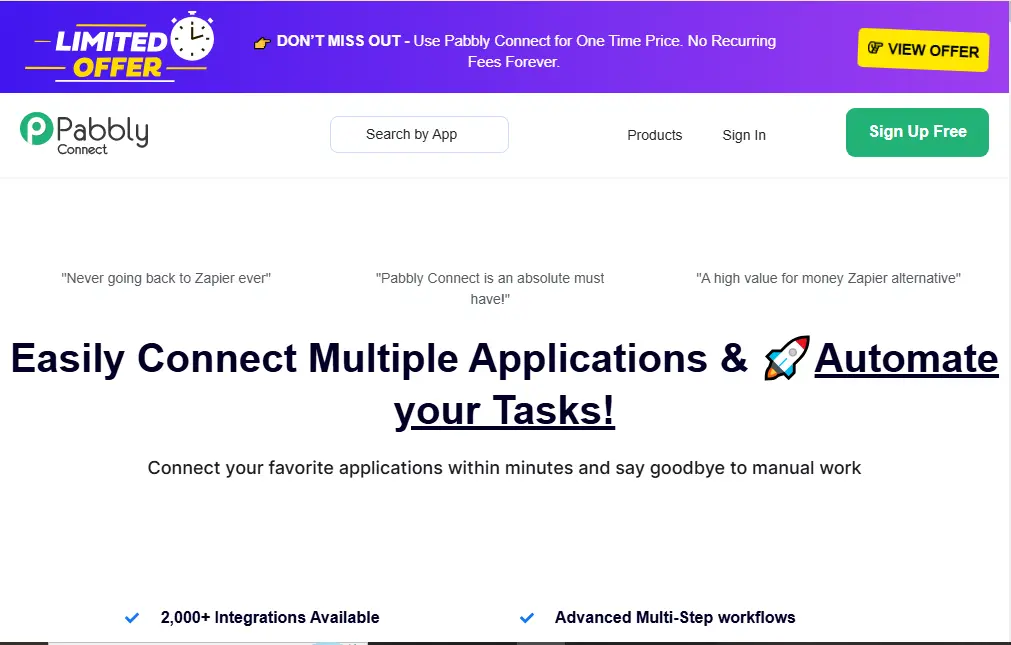
Pabbly offers lifetime deals during promotional periods. Pay once, use forever without subscription fatigue.
These deals include unlimited workflows and thousands of tasks monthly. No feature restrictions on lifetime plans.
For businesses seeking predictable costs, this represents the ultimate alternative to Zapier’s recurring pricing.
Unlimited Workflows
All Pabbly plans include unlimited active workflows. Create as many automations as needed without additional fees.
This contrasts sharply with Zapier’s Zap limits. Teams experiment freely without worrying about workflow quotas.
The unlimited model encourages automation adoption. It’s a Zapier alternative that scales with your needs.
Best for Budget-Conscious Users
Pabbly starts at $19/month for 12,000 tasks. This undercuts Zapier significantly at comparable volumes.
Small businesses and bootstrapped startups get enterprise-level features affordably. The value proposition is compelling.
If price is your primary concern, Pabbly delivers maximum automation per dollar spent. It’s the budget alternative to Zapier.
IFTTT
Simple Automations for Personal Use
IFTTT (If This Then That) focuses on consumer-grade automations. Connect smart home devices, social media, and productivity apps.
The interface is extremely beginner-friendly. Anyone can set up basic workflows in minutes.
Best for personal productivity rather than business processes. It’s a lightweight Zapier alternative for individual users.

Applet-Based System Explained
IFTTT uses ‘Applets’—pre-configured trigger-action pairs. Browse thousands of community-created automations.
Enable existing Applets with one click. Customization options are limited compared to Zapier.
This simplicity appeals to non-technical users. Power users find it too restrictive for complex workflows.
Pros and Cons Compared to Zapier
Pros: Free plan supports 5 Applets. Strong IoT and smart home integrations. Extremely easy to use.
Cons: Limited to single-step automations. Fewer business app integrations. No advanced logic or branching.
Choose IFTTT for personal automation. For business needs, other alternatives to zapier offer more power.
Workato
Enterprise Automation at Scale
Workato handles millions of transactions daily for Fortune 500 companies. Built for massive scale and complexity.
Features include recipe lifecycle management and team collaboration tools. Multiple environments support dev/test/prod workflows.
When Zapier can’t handle your volume or complexity, Workato steps in as the enterprise Zapier alternative.

Advanced API Integration
Workato’s connector SDK lets developers build custom integrations. Reusable connectors deploy across your organization.
REST, SOAP, GraphQL—all supported natively. Legacy system integration is straightforward.
Technical teams appreciate the flexibility. It’s the most developer-friendly alternative to Zapier for enterprises.
Pricing and Suitability
Workato doesn’t publish pricing publicly. Enterprise contracts typically start at $10,000+ annually.
This pricing targets large organizations with dedicated automation budgets. SMBs should look elsewhere.
If you need enterprise features and can afford the investment, Workato outperforms Zapier significantly.
Feature-by-Feature Comparison Table
1Pricing Comparison
Zapier: Free (100 tasks), $29.99/month (750 tasks), $73.50/month (2,000 tasks)
Make: Free (1,000 ops), $9/month (10,000 ops), $16/month (10,000 ops + premium)
Pabbly: $19/month (12,000 tasks), $39/month (24,000 tasks), lifetime deals available
n8n: Free (self-hosted), $20/month (cloud starter), custom enterprise pricing
Power Automate: Included with M365, $15/user/month standalone, custom enterprise
The most affordable Zapier alternatives deliver 5-10x more tasks at similar price points.
Integration Count
Zapier leads with 6,000+ integrations. Make offers 1,500+. Power Automate provides 1,000+.Pabbly Connect supports 1,000+ apps. n8n has 400+ native nodes plus custom HTTP requests.Integration count matters less if your essential apps are covered. Check specific compatibility before choosing an alternative to zapier.
Workflow Complexity Support
Make excels at complex multi-path workflows. Its visual builder handles parallel processing naturally.
n8n matches Make’s complexity with full custom code support. Workato adds enterprise-grade orchestration.
Zapier handles basic branching but becomes unwieldy for elaborate scenarios. Choose alternatives to Zapier for advanced automation needs.
AI and Smart Automation Features
Zapier introduced AI-powered workflow suggestions. Power Automate leverages Microsoft’s AI Builder.Make recently added AI content generation. n8n integrates with OpenAI and other AI services.AI capabilities are emerging across all platforms. Early adopters gain competitive advantages through intelligent automation.
Best Value for Money
Pabbly Connect wins on pure cost-per-task metrics. Its unlimited workflows seal the value proposition.n8n self-hosted eliminates recurring costs. Make balances affordability with powerful features.
For most teams, these Zapier alternatives deliver better ROI than Zapier’s premium-heavy pricing structure.
Zapier Alternative for Small Businesses
Affordable Tools with High ROI
Small businesses need maximum impact from minimal investment. Every dollar counts.
Pabbly Connect offers the best price-to-feature ratio. Unlimited workflows mean you can automate everything without fear of overages.
Make provides sophisticated workflows at accessible pricing. Both represent smart alternatives to zapier for growing companies.
Tools with Generous Free Plans
Make’s free tier gives 1,000 operations monthly. This covers basic automation needs for micro-businesses.
n8n’s self-hosted version is free indefinitely. Technical founders can deploy it without upfront costs.
Start free to validate your automation strategy. Upgrade to paid plans only when usage justifies the expense.
Easy Setup Without Technical Skills
Small business owners wear many hats. Automation tools must be intuitive.
Pabbly’s interface mimics Zapier’s simplicity. The learning curve is minimal for non-technical users.
Template libraries jumpstart common workflows. Copy proven automations and customize for your business. These Zapier alternatives democratize automation.
Zapier Alternative for Startups
Scalability Considerations
Startups scale unpredictably. Your automation platform must grow with you.
Make handles expand gracefully. Add complexity without switching platforms.
n8n’s self-hosted option scales infinitely with infrastructure. Cloud platforms may require plan upgrades as usage spikes. Plan for growth when selecting an alternative to zapier.
Cost-Effective Growth Solutions
Startups burn through funding fast. Operational expenses must stay lean.
Pabbly’s lifetime deals eliminate future automation costs. Make’s tiered pricing grows affordably with usage.
Both alternatives to Zapier let startups invest savings into product development instead of automation subscriptions.
Automation for Marketing and Sales
Startups prioritize customer acquisition. Marketing and sales automation drive growth.
Connect CRM, email marketing, and lead capture tools. Automate follow-ups and nurture sequences.
Make and Pabbly both integrate popular marketing stacks. These zapier alternatives power lean growth engines.
Enterprise-Level Alternatives to Zapier
Security and Compliance Requirements
Enterprises face strict regulatory requirements. SOC 2, HIPAA, and GDPR compliance aren’t optional.
Workato and Microsoft Power Automate meet enterprise security standards. Both offer data residency options.
n8n self-hosted gives complete control over data flow. These alternatives to Zapier satisfy audit requirements that cloud-only tools can’t.
Advanced Workflow Orchestration
Complex organizations need multi-system orchestration. Workflows span dozens of applications.
Workato excels at coordinating intricate processes. Version control and testing environments ensure reliability.
Power Automate handles process mining and optimization. These enterprise Zapier alternatives manage complexity at scale.
Dedicated Account Support
Enterprise customers expect white-glove service. Dedicated success managers guide implementation.
Workato assigns customer success teams. Microsoft provides enterprise support channels.
Zapier’s enterprise tier offers similar support, but competitors often provide better SLAs. Evaluate support quality when choosing an alternative to Zapier.
Open-Source Alternatives to Zapier
Benefits of Self-Hosting
Self-hosting means deploying automation tools on your infrastructure. You control everything.
No vendor can shut down your workflows. No surprise pricing changes. Complete operational independence.
n8n leads the open-source space. It’s the most viable self-hosted Zapier alternative available today.
Full Data Ownership
Cloud automation platforms process your sensitive data. Privacy concerns arise with third-party systems.
Self-hosted tools keep data in-house. No external access. Complete audit trails.
Industries handling PII or financial data benefit most. Open-source alternatives to Zapier eliminate data residency concerns.
Custom API and Developer Control
Open-source platforms give developers full access. Modify source code to meet exact requirements.
Build custom integrations without vendor approval. Community contributions expand capabilities continuously.
Technical teams gain unlimited flexibility. This makes open-source the ultimate alternative to Zapier for developer-centric organizations.
Cheapest Zapier Alternatives in 2026
Free Forever Plans Compared
Make: 1,000 operations monthly. Good for small-scale automation.
n8n: Unlimited self-hosted use. Requires technical setup but truly free.
IFTTT: 5 Applets free. Limited but functional for personal use. These free alternatives to Zapier prove automation doesn’t require big budgets.
One-Time Payment Tools
Pabbly periodically offers lifetime deals. Pay once, access forever.
These promotions typically range from $199-$499 for substantial task allowances. Limited availability makes them highly sought after.
One-time payments eliminate subscription fatigue. This pricing model represents the most economical Zapier alternative in the long term.
Hidden Costs to Watch Out For
Free plans often hide limitations. Task definitions vary between platforms.
Premium connectors may cost extra. Some tools charge for advanced features like webhooks.
Read pricing pages carefully. Calculate total cost, including all necessary features before committing to an alternative to zapier.
AI-Powered Automation Platforms
How AI Is Changing Workflow Automation
AI transforms automation from rule-based to intelligent. Workflows now adapt to patterns and context.
Natural language interfaces let users describe workflows in plain English. The system builds automation automatically.
Both Zapier and its alternatives are racing to integrate AI. This technology will define the next generation of automation platforms.
Smart Triggers and Predictive Actions
Traditional automation reacts to events. AI automation predicts and prevents issues.
Smart triggers analyze historical data to identify optimal timing. Predictive actions suggest next steps based on outcomes.
Early adopters of AI-powered Zapier alternatives gain efficiency advantages. These capabilities evolve rapidly.
The Future of Intelligent Automation
Automation platforms will become autonomous agents. They’ll optimize workflows without human intervention.
Conversational interfaces will replace visual builders. Just describe what you need.
The gap between Zapier and its alternatives may narrow or widen based on AI adoption speed. Choose platforms investing heavily in AI research.
Zapier vs Competitors: Honest Pros and Cons
Where Zapier Still Wins
Zapier has the largest integration marketplace. If it exists, Zapier probably connects to it.
The interface remains the most beginner-friendly. Onboarding is fastest for non-technical users.
Brand recognition and community size provide extensive learning resources. Despite alternatives to Zapier offering better value, Zapier’s ease of use keeps it popular.
Where Alternatives to Zapier Outperform
Pricing: Nearly every alternative offers better cost-per-task ratios. Pabbly and Make deliver significantly more value.
Features: Make and n8n provide superior workflow complexity. Power Automate integrates better with Microsoft.
Flexibility: Open-source options give complete control. Enterprise alternatives handle scale better.
Decision-Making Framework
Choose Zapier if: You’re completely non-technical and need maximum ease. Your required apps are rare.
Choose an alternative to Zapier if: Budget matters. You need complex workflows. You want more control.
Most teams find better value in Zapier alternatives. Evaluate your specific needs against each platform’s strengths.
How to Migrate from Zapier to Another Tool
Exporting and Rebuilding Workflows
Zapier doesn’t export workflows directly. Document each Zap before migrating.
Screenshot trigger conditions and action configurations. Note all field mappings and filters.
Rebuild workflows in your chosen alternative to Zapier. Most platforms offer similar trigger-action structures.
Minimizing Downtime
Run both platforms in parallel during migration. Test new workflows thoroughly before disabling Zapier.
Migrate non-critical workflows first. Gain confidence before touching mission-critical automations.
Plan migration during low-traffic periods. This reduces the risk of data loss or processing gaps.
Testing and Optimization
Send test data through each migrated workflow. Verify outputs match expectations.
Monitor for edge cases that Zapier handled differently. Adjust logic as needed. Optimize for your new platform’s strengths. Many Zapier alternatives enable more efficient workflow designs.
Real-World Use Cases and Case Studies
Marketing Automation Workflows
Automate lead capture from landing pages to CRM. Trigger email sequences based on user behavior. Make excels at complex marketing workflows. Its visual builder maps customer journeys clearly. Marketing teams switching from Zapier report 50% faster campaign deployment. This Zapier alternative streamlines their entire stack.
Lead Generation and CRM Sync
Capture leads from multiple sources. Deduplicate and enrich data before CRM entry.Pabbly Connect handles high-volume lead processing affordably. Its unlimited workflows accommodate multiple lead sources.
Sales teams using alternatives to Zapier avoid task overage charges. They experiment with more aggressive lead capture.
E-commerce Order Automation
Process orders from Shopify to fulfillment systems. Update inventory across multiple channels.
n8n’s self-hosted option ensures order data never leaves your infrastructure. Critical for businesses handling payment information.
E-commerce companies choose this alternative to Zapier for security and reliability. Downtime directly impacts revenue.
Internal Team Productivity Automations
Automate repetitive admin tasks. Connect Slack, Google Workspace, and project management tools.
Microsoft Power Automate shines for teams already using Microsoft 365. Native integrations require minimal setup.
Internal teams gain hours weekly. These Zapier alternatives pay for themselves through recovered productivity.
Common Mistakes When Choosing a Zapier Alternative
Ignoring Scalability
Today’s needs may be modest. Tomorrow you might 10x your automation volume.
Choose platforms that scale gracefully. Migrating again later wastes time and money.
Evaluate growth paths before committing. The best alternative to Zapier grows with your business.
Choosing Based on Price Alone
The cheapest option may lack critical features. Hidden limitations surface during implementation.
Balance cost with functionality. Sometimes paying slightly more unlocks significantly better capabilities. Evaluate total value, not just monthly fees. The right Zapier alternative optimizes for long-term ROI.
Overlooking Integration Limits
Verify all necessary apps are supported. Check integration depth—basic vs. advanced triggers. Some platforms require premium plans for certain connectors. Factor this into cost calculations. Test integrations during trial periods. Ensure your critical workflows work before fully committing to an alternative to Zapier.
Security and Compliance Considerations
GDPR and Data Handling
Automation platforms process personal data. GDPR compliance is mandatory for EU operations. Look for data processing agreements and EU data centers. Understand how each platform handles right-to-deletion requests. Self-hosted alternatives to Zapier, like n8n, give complete GDPR control. Cloud platforms must demonstrate compliance.
API Security Standards
Secure API connections protect sensitive data. Look for OAuth 2.0 support and encrypted credentials storage. Avoid platforms storing API keys in plain text. Check security audit reports and certifications. Enterprise Zapier alternatives meet strict security standards. Verify credentials before trusting them with your data.
Role-Based Access Control
Teams need granular permissions. Not everyone should edit critical workflows. Enterprise platforms offer robust RBAC. Assign roles like viewer, editor, and admin. Audit logs track all changes. This governance becomes critical as automation scales. Choose an alternative to Zapier with strong access controls.
How to Choose the Right Alternative to Zapier for Your Needs
Define Your Automation Goals
List specific processes you want to automate. Prioritize by potential time savings and business impact. Identify complexity requirements. Simple trigger-action vs. multi-step conditional workflows. Clear goals focus your search. Match platform capabilities to your actual needs, not marketing promises.
Map Your Required Integrations
Create a complete list of tools in your current tech stack. Include frequency of data exchange. Check integration availability across platforms. Verify depth—read/write permissions, available triggers. Missing integrations may be deal-breakers. Ensure your chosen Zapier alternative connects your critical systems.
Calculate Total Cost of Ownership
Look beyond monthly subscription fees. Include setup time, training costs, and potential consulting needs. Factor in task volume growth. Estimate usage 12-24 months out. Self-hosted solutions require infrastructure costs. Cloud alternatives to Zapier simplify budgeting but may cost more long-term.
Test with Free Trials
Most platforms offer 14-30 day trials. Build 2-3 real workflows during this period. Test support responsiveness. Try recreating complex Zapier workflows to assess difficulty. Hands-on testing reveals usability issues. Don’t commit until you’ve validated that the platform meets your needs.
Future Trends in Workflow Automation
AI-First Automation Tools
Next-generation platforms will be built AI-first, not retrofitted. Natural language becomes the primary interface. Automation creation happens through conversation. The system understands intent and builds workflows automatically. Early movers gain competitive advantages. Watch which Zapier alternatives invest most heavily in AI infrastructure.
Hyperautomation and Business Process Automation
Hyperautomation combines RPA, AI, and process mining. Entire business processes run autonomously. Microsoft Power Automate leads this trend. Integration with Power Apps and Power BI creates complete automation ecosystems. Simple workflow tools evolve into full BPA platforms. The line between Zapier alternatives and enterprise solutions blurs.
Increasing Demand for Open-Source Platforms
Data sovereignty concerns drive open-source adoption. Companies want control over their automation infrastructure.n8n’s growth demonstrates this trend. Community development accelerates feature parity with commercial platforms. Expect more open-source alternatives to Zapier to emerge. The automation market is diversifying rapidly.
Final Thoughts: Finding the Right Zapier Alternative
Quick Decision Checklist
- Budget-conscious? → Pabbly Connect or Make
- Need complex workflows? → Make or n8n
- Microsoft ecosystem? → Power Automate
- Enterprise requirements? → Workato or Power Automate
- Maximum control? → n8n self-hosted
- Personal use? → IFTTT
Best Tools Based on Different Scenarios
Small businesses benefit most from Pabbly’s unlimited workflows and affordable pricing. Make works well for growing companies needing complexity. Startups should consider Make or n8n cloud. Both scales are affordable as usage grows. Enterprises need Workato or Power Automate. These Zapier alternatives handle their security and scale requirements.
Choosing the Right Automation Platform for Long-Term Growth
Automation platforms become core infrastructure. Switching later proves disruptive and expensive. Invest time in a thorough evaluation. Test multiple platforms before deciding. The perfect Zapier alternative balances current needs with future vision. Choose platforms that grow with your business, not ones you’ll outgrow. The automation landscape offers rich alternatives to Zapier. Whether you prioritize cost, features, or control, better options exist for most use cases. Start with free trials. Build real workflows. Make informed decisions based on hands-on experience. Your business deserves automation that works for you, not against you. Find your ideal Zapier alternative and unlock your team’s productivity potential. Apply these tools in real projects like MERN stack projects.


